What Are The Different Types Of Attachment Wounds And How Do They Affect Relationships?

Written By
Kim Hernandez

Do certain things in your relationships affect you much more than they affect other people?
For instance, you might want a close relationship but feel uncomfortable trusting someone once they become important to you.
Similarly, a small disagreement might feel like rejection, a delayed text makes you worry that someone is losing interest, or you start pulling away from someone you really care about.
Well, these are all signs of attachment wounds. They happen when your emotional needs for safety, comfort, connection, or responsiveness aren’t met in close relationships.
And although these wounds mostly begin in childhood, painful relationship experiences in adulthood also create or deepen attachment injuries.
Now, having an attachment trauma doesn’t mean something is wrong with you. A lot of behaviors that cause problems in adult relationships were once ways your younger self learned to feel safe.
In this blog, I have explained the different types of attachment wounds, how they might be affecting your relationship, and how you can heal.
So, let’s get into it.
Key takeaways
- Attachment wounds are relational injuries that develop when emotional needs for safety, consistency, and connection are not met.
- They mostly begin in childhood, but relationship trauma in adulthood can also create attachment injuries.
- Common wounds involve abandonment, rejection, neglect, inconsistency, betrayal, or feeling unsafe in close relationships.
- Attachment trauma can contribute to anxious, avoidant, or disorganized patterns in adult relationships.
- These patterns are not character flaws but protective strategies learned earlier in life.
- Healing is possible with awareness, supportive relationships, and therapy.
What are attachment wounds?

Attachment wounds are emotional injuries that happen when a relationship doesn’t provide safety, consistency, responsiveness, or emotional connection you need.
You see, as children, we depend on our caregivers for much more than food, clothing, and shelter. We also need someone who can comfort us when we’re scared, respond when we’re distressed, make us feel seen, and help us understand that our emotions are safe to have.
So, when caregiving is repeatedly unpredictable, full of emotional neglect, intrusive, or frightening, you adapt as a child. And these adaptations continue in adulthood.
For instance, if you learnt as a child that asking for comfort will be rejected, you’ll stop asking for support as an adult. This can look like independence, but from inside you’ll be struggling to tell your partner, friend, or sibling that you need them.
Similarly, if you grew up learning that keeping people happy was the only way to avoid conflict or abandonment, you can become a people-pleaser as an adult.
In short, attachment injury is something you learnt as a kid you had to do to stay connected and emotionally safe.
Here’s a simple way to understand attachment trauma:
| Early experience | What you learn |
| Caregiver is emotionally unavailable | My feelings don’t matter. |
| Caregiver is inconsistent | I never know when someone will be there for me. |
| Frequent rejection or criticism | Something is wrong with me. |
| Caregiver is intrusive or controlling | Closeness means losing myself. |
| Abandonment or major separation | People I need can leave me. |
| Caregiver is frightening or unsafe | Relationships aren’t safe. |
What are the different types of attachment wounds?

To begin with, there isn’t a standard list of experiences or feelings that qualify as attachment injury. However, a mental health research published on PubMed has found patterns like anxious, avoidant, and disorganized attachment as signs of wounds.
This is exactly why I look at relational wounds behind a behavioral pattern, which includes:
1. Abandonment wounds
An abandonment wound happens when you are faced with the loss, absence, or emotional withdrawal of someone you depended on.
I am not saying your parents or caregiver literally left you. They might have been present yet emotionally unavailable, unpredictable, or repeatedly withdrawn.
Now, when you grow up, this childhood experience will show up as a fear that your partner will leave you. You will need regular reassurances, become anxious when your partner needs space, or interpret a change in their behavior as a sign that they’re losing interest.
2. Rejection wound
A rejection wound happens when your emotions, needs, personality, or attempts to connect were dismissed or criticized.
For instance, you might be told as a child that you are too sensitive, or you learnt that your parents were affectionate only when you behaved in a certain way. Also, if you expressed your needs, you were criticized instead of being comforted.
Fast forward to adult relationships, and you feel difficult to express your needs, you are sensitive to criticism, and you try to become a perfectionist.
As a licensed Denver therapist, I help you process stress, anxiety, and past trauma in a safe, grounded space.

3. Neglect wound
Neglect wounds don’t happen because your physical needs were neglected. You might have received everything that you needed as a child except emotional attention, comfort, validation, or curiosity.
You had to learn to handle everything by yourself because nobody helped you when you faced difficult emotions or situations.
Later in life, this is what becomes extreme self-reliance. You struggle to ask for help, minimize your own needs, or feel uncomfortable when someone wants to take care of you.
4. Inconsistency wound
When your parents or caregivers are unpredictable, you don’t know what version of the relationship you’ll get.
For instance, sometimes your parents might be very warm while the other times they are distant, angry, or distracted.
This uncertainty teaches you to constantly monitor other people’s moods. And in adulthood, this becomes hypervigilance.
Dr Alex Howard describes this link between childhood trauma and hypervigilance as our nervous system learning to feel unsafe in the environment we’re in.
You analyze your partner’s tone, facial expressions, texts, or behavior because you’re always trying to figure out whether something changed.
5. Betrayal or trust wound
Attachment wounds can also happen when someone you depended on broke your trust or failed to protect you. Examples of this include abuse, broken trust, or other experiences where closeness feels like danger or betrayal.
This can happen during your adulthood also when a partner failed to support you during a crisis and you eventually started feeling disconnected from your partner.
In short, here are the most common types of attachment wounds:
| Attachment wound | Core fear or belief |
| Abandonment | “People I love will leave me.” |
| Rejection | “I’m not good enough to be loved.” |
| Neglect | “My needs don’t matter.” |
| Inconsistency | “I never know when someone will be there.” |
| Betrayal/trust | “Getting close means getting hurt.” |
How do attachment wounds affect adult relationships?

Attachment injuries become very noticeable once you are in a close relationship.
Why?
Well, that’s because romantic relationships activate your need for connection, safety, reassurance, and trust. And when those needs touch an old wound, your reaction feels much bigger than the situation itself.
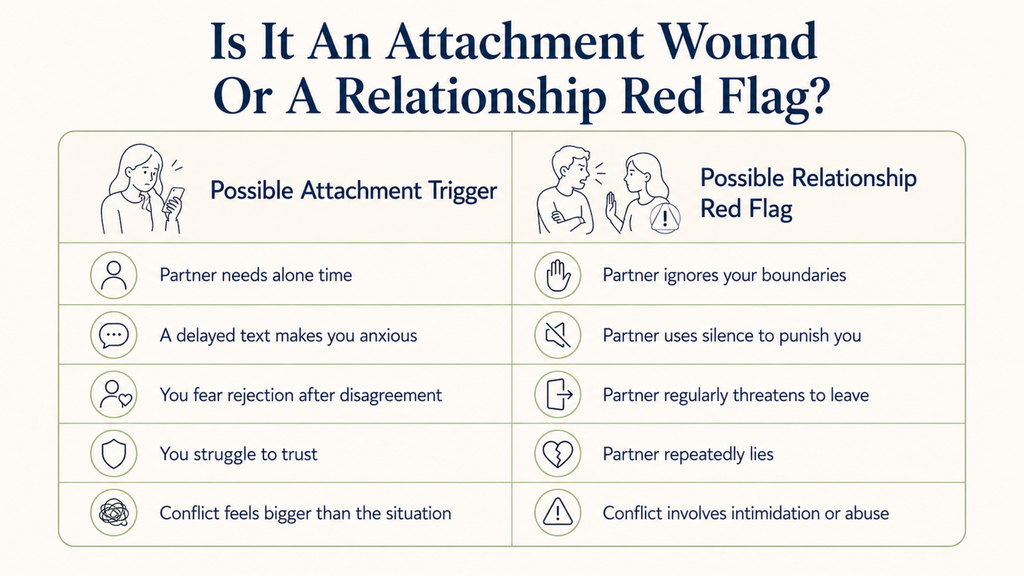
For instance, your partner might need a little alone time. To them, it is simply a way to recover after a stressful day.
But if you have an abandonment wound, your mind immediately thinks that they are losing interest in you.
Overall, here’s how attachment trauma affects relationships:
1. Anxious attachment: ‘Are you going to leave me?’
People with strong attachment anxiety become super alert to signs that their partner might be pulling away. They need frequent reassurance, worry about rejection, overthink texts or changes in tone, or become distressed when their partner needs space.
And the more uncertain they feel, the more they try to restore closeness. They might call repeatedly, ask for reassurance, or want to talk about the relationship immediately.
Unfortunately, this sometimes creates the opposite reaction. A partner feels pressured and pulls away, which then makes the anxious partner even more worried.
2. Avoidant attachment: ‘I don’t need anyone.’
Avoidant attachment looks very different. Instead of desperately seeking closeness, you feel safer keeping distance.
You have difficulty asking for help, feel uncomfortable depending on someone, or pull away when a relationship starts becoming emotionally intense.
You tell yourself that you’re better handling things yourself. On the outside, this looks like independence.
But, under that independence is a fear that relying on someone will cause disappointment, rejection, or loss of control.
3. Disorganized attachment: ‘I want closeness, but closeness scares me.’
This pattern feels especially confusing. You want love, connection, and reassurance. But you also feel frightened or overwhelmed when someone gets close.
So, you move toward the person and then suddenly pull away.
You want to trust them, but you also expect them to hurt you. You want intimacy, but once you experience it, you feel unsafe.
This push-and-pull can make relationships feel unpredictable, emotionally exhausting, and emotionally dissociated.
In short, here’s how attachment trauma affects relationships:
| Attachment pattern | Common relationship response |
| Anxious | Seeks reassurance and fears abandonment |
| Avoidant | Creates distance and relies heavily on self |
| Disorganized | Wants closeness but may also fear it |
| Secure | More comfortable with intimacy, communication, and independence |
Therapist’s tip: These patterns aren’t fixed personality types. You can respond differently depending on the relationship, the situation, and how emotionally safe you feel.
How does childhood attachment trauma affect relationships?
Adult relationships are shaped by many things, including your temperament, life experiences, current stress, and relationships you’ve had over the years. However, childhood relationships and traumas do influence the expectations you carry into adult relationships.
For instance, if you’ve learnt that your needs won’t be met, you are less likely to talk about those needs with your partner.
Similarly, if you’ve learnt that people suddenly leave, you become super sensitive and vigilant towards signs of rejection.
Also, sometimes even intimacy can feel uncomfortable if you’ve always seen closeness with criticism, fear, or unpredictability.
Bonus: Here’s what attachment trauma looks like in everyday relationships
- Overthinking a partner’s short text.
- Feeling panicked when a partner needs space.
- Avoiding difficult conversations because conflict feels unsafe.
- Having trouble trusting someone.
- Feeling responsible for keeping everyone happy.
- Shutting down when someone asks about your emotions.
- Constantly worrying that you’re too much for your partner.
- Pushing someone away when you actually want them closer.
Can attachment wounds be healed?
Yes. But not the way you might have thought.
You see, people think the only way to heal attachment wounds is by erasing past memories and forcing themselves to become more secure.
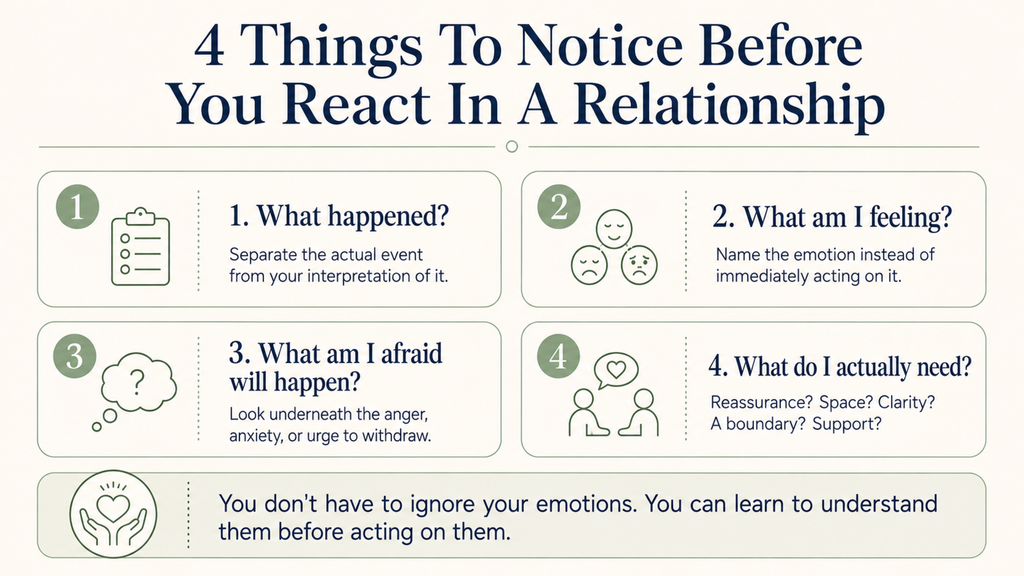
But that’s not true. On the contrary, you’ve to begin by understanding your patterns and noticing what you feel unsafe in a relationship.
Once you understand your triggers, you can start separating what is happening right now from what your past might be telling you is happening.
Therapy approaches like cognitive behavioral therapy are especially helpful here.
A trauma informed therapist can help you detect past experiences, understand current patterns, and build healthy ways to communicate your needs and manage distress.
As a licensed Denver therapist, I help you process stress, anxiety, and past trauma in a safe, grounded space.
Conclusion
I am sure that you now have a solid understanding of what are attachment wounds and how they shape safety, trust, closeness, and your emotional needs.
Yes, attachment wounds affect relationships. You become afraid of abandonment, uncomfortable with intimacy, hyper-independent, or highly sensitive to rejection.
But these patterns don’t mean you’re broken. They developed because they once helped you cope with relationships that didn’t feel consistently safe.
And with awareness, supportive relationships, and therapy, it is possible to develop healthier and more secure ways of connecting.
Got more questions or looking for a therapist in Denver?
You can get in touch with me!
I am a licensed therapist in Colorado, and I work with adults facing anxiety, trauma, chronic stress, burnout, and relationship difficulties.
My sessions are available in-person in Denver and online across Colorado.
FAQs about attachment wounds
What are attachment wounds?
Attachment wounds are emotional injuries that can develop when important needs for safety, connection, consistency, comfort, or responsiveness aren’t adequately met in close relationships.
What are the different types of attachment wounds?
Common attachment wounds include abandonment, rejection, neglect, inconsistency, and betrayal or trust wounds.
These aren’t official clinical categories, and different therapists can describe attachment trauma differently.
Can attachment wounds affect romantic relationships?
Yes.
Attachment wounds can influence how you handle intimacy, trust, conflict, emotional vulnerability, and separation.
For instance, you can become highly anxious when your partner pulls away or avoid emotional closeness because depending on someone feels unsafe.
Can childhood trauma cause attachment issues in adults?
Childhood trauma can affect attachment and later relationship patterns, particularly when traumatic experiences involve caregivers or important relationships.
However, having relationship difficulties doesn’t mean you experienced childhood trauma.
Can you heal attachment wounds as an adult?
Yes.
Healing involves understanding your attachment patterns, identifying triggers, developing healthier ways to communicate your needs, building safe relationships, and working with a therapist.
How long does it take to heal attachment wounds?
There isn’t a specific timeline.
It depends on your experiences, current circumstances, the patterns you’re working on, and the type of support you receive. For instance healing anxious attachment caused by a recent breakup might take less time than healing attachment wounds caused by recurring childhood trauma.
Can therapy help with attachment trauma?
Yes.
Attachment-informed and trauma-informed therapy can help you understand how earlier relationship experiences may be influencing your thoughts, emotions, and behaviors today.
Licensed Professional Counselor Candidate , MA, LPCC
Kim Hernandez is founder of 12:2 Counseling in Denver, helping individuals address trauma, anxiety, addiction-related patterns, and burnout through EMDR, somatic therapy, CBT, and compassionate body-mind-spirit care that supports steadier relationships, emotional freedom, and lasting change forward.