Agoraphobia Vs Social Anxiety: 6 Ways You Can Tell The Difference

Written By
Kim Hernandez

Picture this: There are two people who skip a birthday party.
One of them decided to stay home because they thought a crowded event like a party can trigger a panic attack and there won’t be anyone to help them.
However, the other person didn’t attend the party because of their social anxiety which led them to believe that they would say or do something awkward.
From the outside, it can seem like both people made the same choice of not attending the party.
But the underlying reason for making that choice was different. The first person didn’t attend the party because of agoraphobia or the fear of being stuck someplace with no help. The second person acted out of social anxiety, or the fear is being watched, judged, or embarrassed.
Now, if you or your loved ones constantly decide to avoid social gatherings, I am sure you want to know whether it is agoraphobia or social anxiety causing it.
That’s why, in this blog, I have shared 6 ways you can tell the difference between agoraphobia vs social anxiety.
So, let’s have a close look at all the differences.
Key takeaways
- Agoraphobia makes you feel trapped or unable to get help if panic-like symptoms start.
- Social anxiety makes you feel like you are being judged, embarrassed, or rejected by other people.
- Having a trusted companion by your side can make agoraphobia easier to manage. And going unnoticed makes social anxiety easier to manage.
- A person can have both agoraphobia and social anxiety at the same time.
What is the difference between agoraphobia and social anxiety?

To begin with, agoraphobia is an anxiety disorder where a person feels fearful and starts avoiding situations. They do this primarily because of an underlying worry that it might be difficult to escape or get help if panic-like symptoms show up.
The National Library of Medicine lists agoraphobia symptoms under the DSM-5-TR criteria. And it says fearfulness can happen in at least two of the following five scenarios:
- Public transportation
- Open spaces
- Enclosed spaces
- Lines or crowds
- Being outside the home alone.
Also, the fear and avoidance that results from agoraphobia can last for at least six months.
Social anxiety, on the other hand,
Social anxiety, on the other hand, is the fear of social situations where other people might notice, evaluate, or judge you. For instance, if you have social anxiety, you might become fearful in performance-related situations like public speaking.
Social anxiety is also more common than agoraphobia. So much so that estimates from the National Institute of Mental Health suggest that 7.1% of all adults in the country had social anxiety in just the past year. Compared to this, only 0.9% of adults have agoraphobia nationwide.
As a licensed Denver therapist, I help you process stress, anxiety, and past trauma in a safe, grounded space.

Overall, here are the main differences between agoraphobia vs social anxiety:
| Agoraphobia | Social anxiety | |
| Main fear | Being trapped or without help if symptoms hit | Being judged, embarrassed, or rejected |
| Usual triggers | Buses, crowds, lines, enclosed or open spaces, being out alone | Conversations, meetings, eating in public, speaking up |
| Does a trusted person help | Often, a lot | Sometimes, but only if the audience is not there |
| Does going unnoticed help | Not much | A lot |
| Your attention goes to | Body sensations and exits | How you look and sound |
6 Ways you can tell the difference between agoraphobia vs social anxiety

Now that you know the exact difference between agoraphobia and social anxiety, here are six ways you can tell whether you or someone you know has either of these.
#1. What you are afraid of
The biggest difference between agoraphobia and social phobia is what you are afraid will happen.
For instance, if you have agoraphobia, your biggest worry can be panicking, fainting, or getting sick once you are outside. Also, you will be anxious about not getting any help at all in that citation.
Social anxiety, on the other hand, brings a different kind of fear. Here, your fear arises mostly in social situations where you think you might get nervous or look weird or incompetent in front of others.
Now, it is hard to tell the difference between social anxiety disorder vs agoraphobia because both bring some sort of embarrassment.
But then, with agoraphobia, you get embarrassed about losing control of your body, while with social anxiety, you are embarrassed because you think you are being judged.
My take: Well, as a trauma informed therapist in Denver, CO, I address the source of fear in the first therapy session itself. This helps me distinguish social anxiety vs agoraphobia clearly and plan therapy precisely around what my client is experiencing.
#2. Where the fear shows up
The second major difference between agoraphobia vs social anxiety is where you are getting afraid or anxious.
If you have agoraphobia, you will likely become fearful of places and situations that are difficult to leave. However, if you have social anxiety, you will be afraid of people judging you.
For instance, a person with agoraphobia might feel fearful while driving on a long stretch of road with no easy exit.
On the other hand, a person with social anxiety will comfortably drive on the same stretch of road. But they will be anxious about the meeting or event that awaits them at the end of the drive.
#3. Whether or not a trusted person makes the situation easier
If you have agoraphobia, simply having someone you can trust by your side can make a feared situation manageable. That’s because you know that help is available.
In fact, this is also why some of my clients with agoraphobia who are undergoing EMDR therapy for anxiety go to some places only when they have a trusted aide.
Now, if you have social anxiety, having a trusted aide can definitely make things feel easier. But the main fear of looking weird, being judged, etc., can still persist since coworkers, strangers, friends, or the audience you are worried about are still present.
#4. Whether or not going unnoticed makes you feel better
If you are someone who has social anxiety, you will feel comfortable in such situations where no one is paying attention to you.
For instance, if you are sitting alone in a quiet park or a nearly empty diner, you will feel completely okay. However, if you are in a room with a lot of people or where people are watching you, you will start feeling anxious.
Now, if you have agoraphobia, you might still feel anxious in these places and situations, but not because people are watching you. Your concern will be whether you can get out or get help if something happens.
#5. What your attention locks onto
Does it happen that whenever your anxiety levels are high, you start scanning your body for signs of panic?
This can include signs like racing heart, dizziness, shortness of breath, or feeling faint.
Or do you start looking around for an exit sign or for a place where you can get help?
If yes, you most likely have agoraphobia.
On the other hand, if you become very focused on how you are coming across, such as analyzing your voice, tone, etc., you are acting out of social anxiety. Also called self-focused attention, this is one of the factors that can keep social anxiety going among people.
#6. What safety behaviors you rely on
Safety behaviors are small things you do to make a feared situation feel more manageable or survivable. They can be a useful clue about whether you have agoraphobia or social phobia because they often show you what you are trying to protect yourself from.
Here’s how you can tell the difference between agoraphobia vs social anxiety based on your safety behaviors:
| Agoraphobia safety behaviors | Social anxiety safety behaviors |
| Sitting on the aisle or near the exit | Rehearsing what you will say before speaking |
| Knowing where the bathrooms are | Avoiding eye contact |
| Carrying water or medication for a likely emergency | Holding a drink to hide shaky hands |
| Only going out with a safe person | Letting others do the talking |
| Staying close to home | Wearing layers to hide sweating or blushing |
Can you have both agoraphobia and social anxiety?
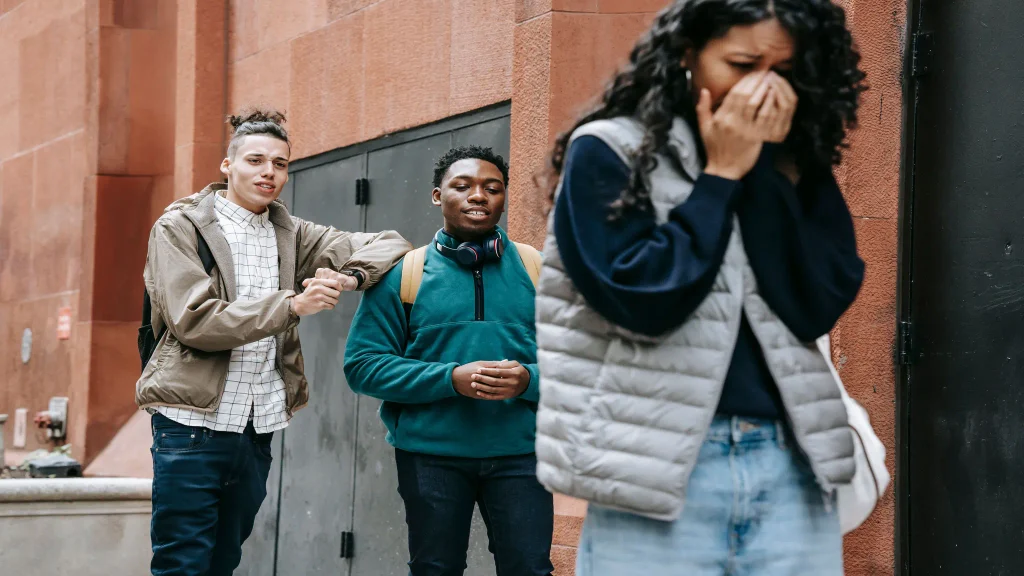
Yes, you can.
Many anxiety disorders can overlap. As per National Library of Medicine’s DSM-5-TR criteria, about 90% of people with agoraphobia have at least one other mental health condition.
Meaning, if you have agoraphobia, there is a good chance that you can also have social anxiety at the same time.
For instance, you might avoid crowded places because you are worried you can be trapped and start panicking. At the same time, you might also be worried that other people will stare at you if you start showing signs of panic.
Pro tip: If you find yourself in an unusual situation and you are afraid panic will kick in, you can try these simple grounding techniques for panic attacks.
FAQs about agoraphobia vs social anxiety
Is agoraphobia a type of social anxiety?
No. They are separate anxiety disorders.
Agoraphobia involves the fear of being trapped or unable to get help, while social anxiety involves the fear of being judged, embarrassed, or rejected.
Is agoraphobia just a fear of leaving the house?
No. Being unable to leave home can happen in severe agoraphobia, but it is not the only way agoraphobia can show up.
People with agoraphobia leave home but avoid specific situations, such as crowded stores, buses, long lines, or places where they feel they cannot easily escape.
Can you have agoraphobia without panic attacks?
Yes. Agoraphobia is diagnosed separately from panic disorder. That’s because the fear isn’t limited to having a panic attack. You can also be afraid of other things like fainting, falling, losing control, or losing bladder control.
How do I know if I have agoraphobia or social anxiety?
You can look at the six differences I have listed to point out which situations you recognize yourself in.
If you still can’t tell whether you have agoraphobia or social phobia, a therapist can help you find the difference with a more detailed question and answer session.
You might also want to read: How To Find A Therapist For Social Anxiety In Denver?
As a licensed Denver therapist, I help you process stress, anxiety, and past trauma in a safe, grounded space.
Final words
As you can see, agoraphobia and social anxiety can look similar from the outside because both can make you avoid situations that other people find completely normal. But fear that is making you avoid the citation can be different.
Got more questions or looking for anxiety therapy in Denver or anywhere in Colorado?
You can get in touch with me!
At 12:2 Counseling, I offer a free 15-minute consultation where we can talk about what you are experiencing. If you decide to move forward with therapy, I offer in-person therapy at my Highlands Ranch office and online therapy throughout Colorado.
Licensed Professional Counselor Candidate , MA, LPCC
Kim Hernandez is founder of 12:2 Counseling in Denver, helping individuals address trauma, anxiety, addiction-related patterns, and burnout through EMDR, somatic therapy, CBT, and compassionate body-mind-spirit care that supports steadier relationships, emotional freedom, and lasting change forward.