Why Are You Waking Up Depressed And How To Prevent It?

Written By
Kim Hernandez

Do you wake up in the morning and immediately feel a wave of sadness, anxiety, or heaviness?
Well, a lot of people experience exactly this and assume they are lazy, negative, or simply not trying hard enough to enjoy life.
But that is not true.
You see, waking up depressed is connected to depression symptoms, anxiety, poor sleep, emotional exhaustion, stress, or feeling overwhelmed by what the day ahead brings.
Here, mornings might feel like the hardest part of the day. You struggle to get out of bed, feel emotionally drained before starting your routine, or experience a strong sense of sadness that slowly improves as the day goes on.
And when this pattern continues, it becomes morning depression.
Thankfully, there are simple mental and lifestyle fixes to stop this from happening.
In this blog, I have explained it all, including:
- Why you wake up depressed
- Why depression feels worse throughout the morning
- Common morning depression symptoms
- The connection between morning anxiety and depression
- How to stop waking up feeling depressed
- And when a therapist in Denver can help you
So, let’s get started.
Key takeaways
- You are waking up depressed likely because of depression, anxiety, stress, poor sleep, or emotional exhaustion.
- Morning depression is caused by a pattern where depressive symptoms feel stronger after waking up and improve later in the day.
- Feeling depressed in the morning is not a sign of laziness or weakness.
- Small changes to your morning routine, sleep habits, and thought patterns can make mornings easier.
- Therapy can help you understand the emotional reasons behind persistent sadness, anxiety, and difficulty starting the day.
Why are you waking up depressed?

It can sometimes feel very confusing why you’re waking up depressed. You can have a good job, supportive relationships, and positive things happening in your life, but still wake up feeling sad, anxious, or emotionally exhausted.
This happens because your mood is influenced by many internal factors.
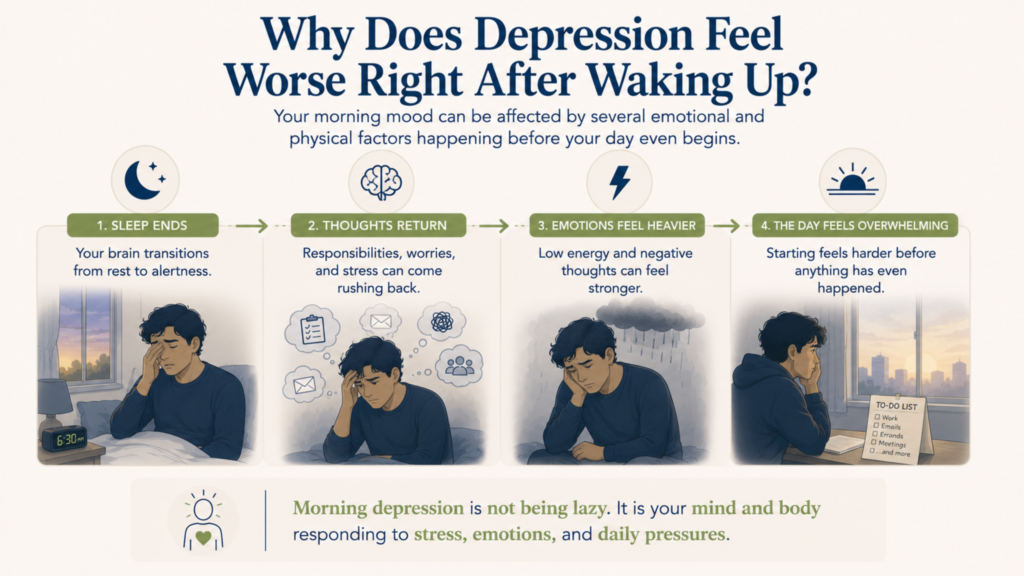
Depression on waking is connected to the way your brain and body respond during the transition from sleep to being awake.
When you first wake up, your mind quickly becomes aware of your responsibilities, worries, and expectations for the day.
And if you’re dealing with depression, anxiety, or work avoidance, this transition can feel even more overwhelming. So, instead of thinking that you have a new day ahead, your brain might immediately focus on:
- There is so much to do.
- I don’t have the energy for today.
- What if I cannot handle everything?
These thoughts create a heavy emotional feeling before you have even gotten out of bed.
Another reason you wake up depressed is sleep deprivation. You might sleep for enough hours but still wake up feeling exhausted because of:
- Poor sleep quality
- Frequent waking during the night
- Stress affecting your sleep
- An inconsistent sleep schedule
- Emotional strain that carries into your rest
This is why some people experience depression on waking even after what seems like a full night of sleep.
As a licensed Denver therapist, I help you process stress, anxiety, and past trauma in a safe, grounded space.

Why is depression worse in the morning?
There isn’t a single answer for everyone.
Mornings are harder for some people because of changes happening in their body after waking. For others, it is connected to poor sleep, anxiety, stress, or the pressure of starting a new day.
Here are some common reasons why depression is worse in the morning:
| Possible reason | How it affects your morning |
| Sleep problems | Poor-quality sleep can leave you feeling emotionally and physically drained |
| Morning stress response | Natural changes in stress hormones can make emotions feel stronger after waking |
| Anticipation of responsibilities | Thinking about the day ahead can trigger anxiety and overwhelm |
| Depression symptoms | Low energy, sadness, and hopeless thoughts can feel stronger early in the day |
Let’s understand why is depression worse in the morning in detail

1. Your body is transitioning from sleep to being awake
Your body goes through many changes when you wake up.
During sleep, your brain and body are in a different state. And as you wake, your body starts increasing alertness and preparing you for the day.
For most people, this transition happens smoothly.
But when you are dealing with depression or anxiety, this shift can feel much heavier. Your mind might immediately become focused on worries, responsibilities, or negative thoughts.
For instance, instead of slowly starting your day, you might wake up thinking:
- I don’t want to deal with work today.
- I already feel exhausted.
- Why am I feeling lonely in relationship.
- I don’t know how I’m going to get through everything.
These thoughts can make mornings feel emotionally overwhelming.
2. Sleep quality affects your mood
Sleep and mental health are closely connected.
When your sleep is disrupted, your brain has a hard time regulating emotions, managing stress, and maintaining energy. You might experience:
- Waking up tired despite sleeping enough hours
- Difficulty feeling refreshed in the morning
- Increased irritability
- Lower emotional resilience
- More negative thoughts
This can create a cycle. Poor sleep makes your mood worse, and a lower mood can make it harder to sleep well.
3. The day ahead feels overwhelming
Sometimes, the reason you wake up depressed every morning is not the morning itself. It is what the morning represents.
For someone experiencing high stress, anxiety, or burnout, waking up can immediately bring awareness of everything waiting for them. You might start thinking about:
- Work responsibilities
- Difficult conversations
- Unfinished tasks
- Personal problems
- Expectations you feel unable to meet
When your brain sees the entire day at once, everything can feel impossible before you even begin.
4. Depression symptoms follow a daily pattern
For some people, depression symptoms naturally feel stronger at certain times of the day. This can include:
- Feeling very low after waking
- Having little energy in the morning
- Difficulty getting started
- Feeling more hopeful later in the day
This pattern is sometimes referred to as morning depression.
Again, morning depression is not a separate condition. It is a way of describing when depressive symptoms are more intense after waking.
What are the symptoms of morning depression?
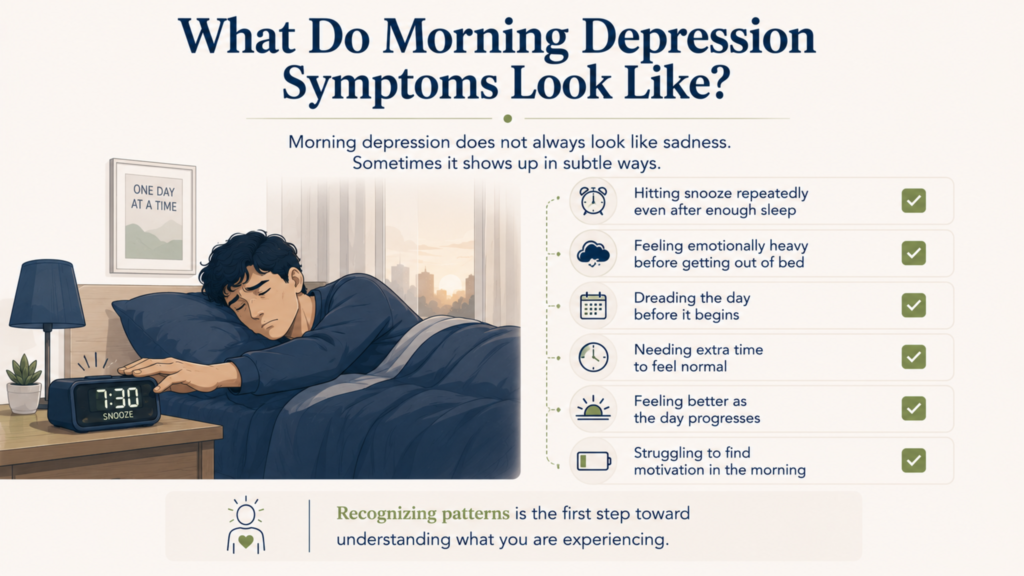
Morning depression can look different for everyone. Some people experience intense sadness, while others notice a lack of energy, motivation, or emotional connection.
Here are some common morning depression symptoms:
- Feeling sad or emotionally heavy immediately after waking
- Struggling to get out of bed
- Feeling anxious about the day ahead
- Having very little motivation in the morning
- Feeling exhausted despite sleeping
- Difficulty concentrating
- Feeling hopeless or overwhelmed
- Losing interest in activities you normally enjoy
- Feeling better as the day progresses
Why is anxiety worse in the morning?
Morning anxiety and depression often happen together.
A lot of people who wake up feeling depressed also notice a sense of worry, tension, or fear immediately after waking.
But why?
Well, one reason is that mornings create a moment where your brain starts thinking about everything you need to handle.
During sleep, you are temporarily disconnected from your responsibilities. But when you wake up, those thoughts return. You suddenly remember:
- An upcoming deadline
- A stressful meeting
- A difficult conversation
- Problems you have been avoiding
And for someone already experiencing anxiety, these thoughts can create an immediate stress response.
Another reason is that anxiety feeds on uncertainty.
Morning represents an entire day of unknown situations, decisions, and expectations. So your brain might try to prepare you by thinking through every possible problem.
The problem is that instead of helping, this can leave you feeling anxious and emotionally exhausted before your day even begins.
How to stop waking up depressed?

If you are waking up depressed every morning, don’t force yourself to suddenly feel happy the moment you open your eyes.
Instead, the focus is on creating small changes that support your mood, reduce stress, and make mornings feel more manageable.
Here are some strategies that can help:
1. Create a gentle morning routine
When you wake up feeling depressed, starting the day can feel like a huge task. This is why having a simple routine can help.
A morning routine gives your brain structure before negative thoughts have time to take over.
It does not need to be complicated. For instance:
- Drink a glass of water
- Open the curtains and get natural light
- Take a short walk
- Stretch for a few minutes
- Listen to calming music
- Make your bed
Don’t try to achieve peak productivity right away. Instead, create small moments that tell your brain: I am starting my day.
2. Avoid staying in bed with negative thoughts
When you wake up depressed, it can feel tempting to stay in bed and avoid the day.
Yes, sometimes you genuinely need extra rest. But spending a long time lying awake while replaying negative thoughts can make those feelings stronger.
That’s because your mind starts focusing on worries, regrets, and everything that feels wrong.
So, instead of staying in bed, try creating a small first step. For instance:
- Just sit up.
- Put your feet on the floor.
- Walk to the kitchen.
Small actions like these can help create momentum when motivation feels unavailable.
3. Get morning sunlight
Natural light plays an important role in regulating your body’s internal clock.
Getting sunlight soon after waking helps signal to your brain that it is time to become alert and active.
A simple habit like sitting near a window, stepping outside, or taking a short morning walk can be helpful. This is especially important if you spend most of your day indoors or have an inconsistent sleep schedule.
4. Pay attention to your sleep habits
Since sleep and mood are closely connected, improving your sleep routine can make mornings easier. Some helpful habits include:
- Going to bed and waking up at consistent times
- Limiting excessive screen time before bed
- Creating a relaxing nighttime routine
- Avoiding caffeine too late in the day
- Making your bedroom comfortable for sleep
Poor sleep does not always cause depression, but improving sleep can support better emotional regulation and energy levels.
5. Avoid starting your day with overwhelming thoughts
People experiencing morning depression immediately think about everything they need to accomplish. The problem here is that your brain sees the entire day as one giant challenge.
You should instead focus only on the next step.
For instead, instead of thinking you have so much work today, think that you only need to get ready first, or complete your first task.
Simply put, breaking the day into smaller moments can make it feel less overwhelming.
6. Challenge the negative thoughts that appear in the morning
Depression changes the way you interpret situations. When you wake up feeling low, your thoughts immediately become more negative.
For instance, you might think:
- I am never going to feel better.
- I cannot handle anything today.
- Nothing is going to work out.
These thoughts can feel completely true in the moment. But thoughts are not always facts.
You can challenge these thoughts using therapy approaches like cognitive behavioral therapy (CBT).
7. Create something to look forward to
When every morning feels like something you have to survive, your brain naturally starts associating waking up with stress.
That’s why I suggest you add small positive experiences to help change that association. It could be something as simple as:
- Drinking your favorite coffee
- Listening to a podcast
- Taking a walk outside
- Calling someone you enjoy talking to
- Spending a few minutes on a hobby
These things do not fix depression by themselves, but they can create small moments of comfort and connection.
When should you talk to a therapist about waking up depressed?
Everyone has difficult mornings occasionally. A stressful week, poor sleep, or a challenging situation can affect your mood.
However, if you are waking up depressed every morning and it continues for weeks or starts affecting your daily life, it might be time to seek support.
You should talk to a therapist if:
- You wake up feeling sad or hopeless most days
- Your depression is affecting your work, relationships, or responsibilities
- You feel anxious as soon as you wake up
- You struggle to get out of bed regularly
- You have lost interest in things you normally enjoy
- You feel emotionally exhausted even after resting
- Your negative thoughts are causing nervous system dysregulation
Therapy can help you understand what is contributing to your morning depression and develop healthier ways to manage difficult emotions.
As a licensed Denver therapist, I help you process stress, anxiety, and past trauma in a safe, grounded space.
To sum up
I am sure you now have a good idea about why you are waking up depressed.
You see, morning depression can be connected to sleep problems, anxiety, stress, overwhelming responsibilities, or the way depression affects your thoughts and energy levels.
The hardest part about mornings is that your brain immediately starts responding to everything waiting for you.
But small changes can make mornings feel more manageable. Creating a gentle routine, improving sleep habits, getting morning sunlight, challenging negative thoughts, and focusing on small steps can all help.
Also, if waking up depressed has become a regular experience, therapy can help you understand the deeper reasons behind it and develop healthier ways to cope.
Looking for a therapist in Denver?
You can get in touch with me!
I work with professionals, executives, business owners, and high-achieving adults navigating anxiety, depression, burnout, perfectionism, and the emotional challenges that come with demanding careers and personal responsibilities.
I use evidence-based approaches like CBT and EMDR to help clients understand their patterns, process difficult emotions, manage stress, and build a healthier relationship with themselves.
My sessions are available in-person in Denver and virtually across Colorado.
FAQs about waking up depressed
Why am I waking up depressed?
Waking up depressed can happen because of several reasons, including poor sleep, stress, anxiety, depression symptoms, emotional exhaustion, or feeling overwhelmed by responsibilities.
Why is depression worse in the morning?
Depression can feel worse in the morning because of changes in sleep patterns, stress hormones, low energy levels, and the way your brain responds to daily responsibilities after waking.
Why do I wake up feeling sad?
Waking up feeling sad can happen when your brain is carrying stress, anxiety, unresolved emotions, or depressive symptoms.
Sometimes the sadness is connected to what you are facing that day, while other times it might be related to broader mental health patterns.
How do I get up when depressed?
When depression makes getting out of bed difficult, focus on very small actions instead of trying to complete your entire morning routine immediately.
Start with simple steps like sitting up, drinking water, opening curtains, or walking to another room.
Small actions can help create momentum when motivation feels low.
Can anxiety cause me to wake up feeling depressed?
Yes.
Morning anxiety and depression often occur together.
Anxiety can make you wake up worrying about responsibilities, uncertainty, or problems you need to handle. Over time, that constant stress can contribute to feeling emotionally exhausted and depressed.
Is waking up depressed every morning a sign of depression?
Waking up depressed every morning can be a sign of depression, especially when it happens consistently and affects your daily life.
However, it can also be connected to other factors such as stress, anxiety, poor sleep, burnout, or major life changes.
A mental health professional can help identify what is contributing to these feelings and recommend the right support.
Licensed Professional Counselor Candidate , MA, LPCC
Kim Hernandez is founder of 12:2 Counseling in Denver, helping individuals address trauma, anxiety, addiction-related patterns, and burnout through EMDR, somatic therapy, CBT, and compassionate body-mind-spirit care that supports steadier relationships, emotional freedom, and lasting change forward.