What Is Nervous System Dysregulation? Signs, Causes, And How to Heal It

Written By
Kim Hernandez

Does your body sometimes react strongly to stress or you feel on the edge for no clear reason?
Or maybe you constantly swing between feeling overwhelmed and completely shut down.
If yes, you might be experiencing nervous system dysregulation.
You see, your nervous system is designed to keep you safe. And to do so, it constantly scans your environment for cues of danger or safety.
But if you’ve ever gone through chronic stress, anxiety, or trauma, your nervous system can start to get stuck in survival mode.
And that’s when dysregulation happens.
In this blog, I’ll explain it all in a simple way. You’ll understand:
- What nervous system dysregulation actually is
- How trauma affects your nervous system
- The most common signs of dysregulation
- And how to regulate your nervous system in a practical way
So let’s get into it.
Key takeaways
- Nervous system dysregulation happens when your body gets stuck in survival states like fight, flight, or shutdown
- It is often linked to chronic stress, anxiety, or trauma
- Trauma can change how your nervous system responds to safety and danger
- Common signs include anxiety, numbness, irritability, fatigue, and feeling overwhelmed easily
- Healing involves nervous system regulation techniques and somatic-based approaches
- The goal is not constant calm, but flexibility and a sense of safety in your body
What is nervous system dysregulation?

For starters, your nervous system has one main job: To keep you safe.
And it does this by switching between different states depending on what it senses around you.
In a healthy system, this switching is flexible. You feel calm when things are safe, alert when needed, and then you naturally come back to calm again.
But in nervous system dysregulation, that balance gets disrupted.
So instead of flowing smoothly between states, your system might:
- Stay stuck in high alert (anxiety, overthinking, panic)
- Shut down completely (numbness, fatigue, disconnection)
- Or bounce between both the extremes
This is what moving outside your window of tolerance looks like day to day.
This is why many people feel like they are too reactive or emotionally exhausted without fully understanding why.
After all, you’re not just reacting to your current life, you’re also reacting from stored experiences in your nervous system.
This is where trauma therapists use approaches like somatic therapy for long-term healing and regulation.
As a licensed Denver therapist, I help you process stress, anxiety, and past trauma in a safe, grounded space.

What are signs of a dysregulated nervous system?
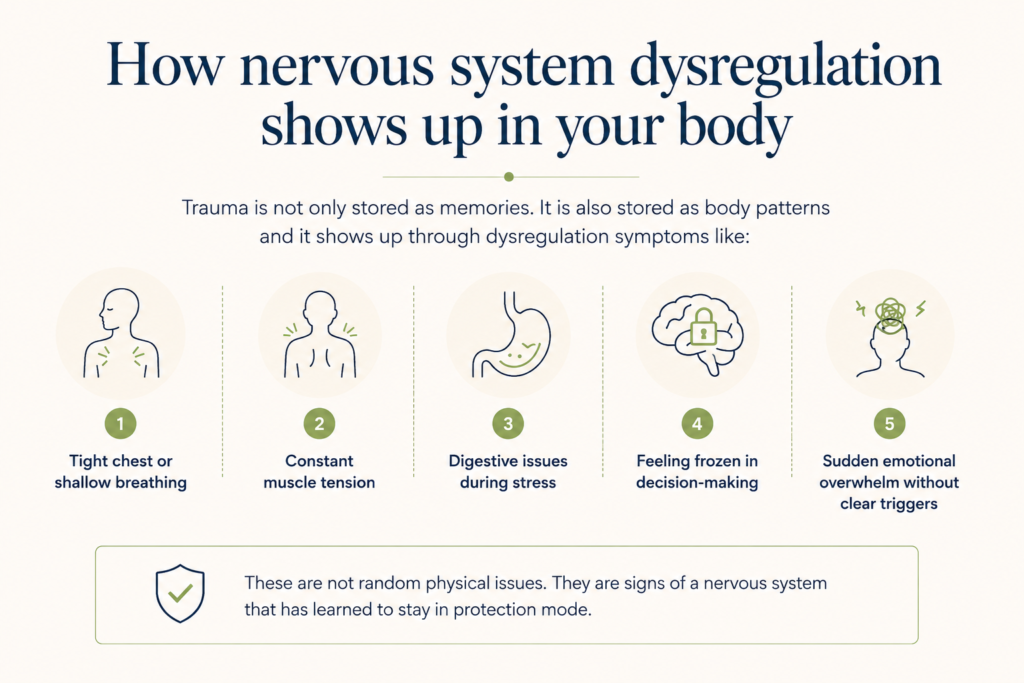
Nervous system dysregulation can show up in many different ways. And most often, people don’t realize that their symptoms are connected.
Here are some simple signs of nervous system dysregulation you might be experiencing on a regular basis:
| Category | What it can feel like |
| Emotional | Anxiety, irritability, mood swings, emotional overwhelm |
| Body-based | Fatigue, tension, headaches, digestive issues |
| Nervous system states | Feeling “on edge” or emotionally numb |
| Sleep & energy | Insomnia, restlessness, or constant exhaustion |
| Thinking patterns | Overthinking, racing thoughts, difficulty focusing |
| Trauma responses | Feeling unsafe, hypervigilance, shutdown, dissociation |
Now, you might notice yourself in one category more than others, or you might move between several.
For instance, one day you feel anxious and restless and the next day you feel completely drained or disconnected.
This back-and-forth pattern is actually very common in nervous system dysregulation. And it’s often misunderstood as mood disorders, when in reality it is the nervous system trying to protect you.
How does trauma cause nervous system dysregulation?

To really understand the nervous system’s dysregulation, we need to go a little deeper into how the body actually responds to stress and trauma.
You see, most people assume that their mind is overreacting. But what’s actually happening is much more physical than that.
Here’s how:
The nervous system doesn’t separate emotional stress from physical danger very clearly. It responds to both in similar ways.
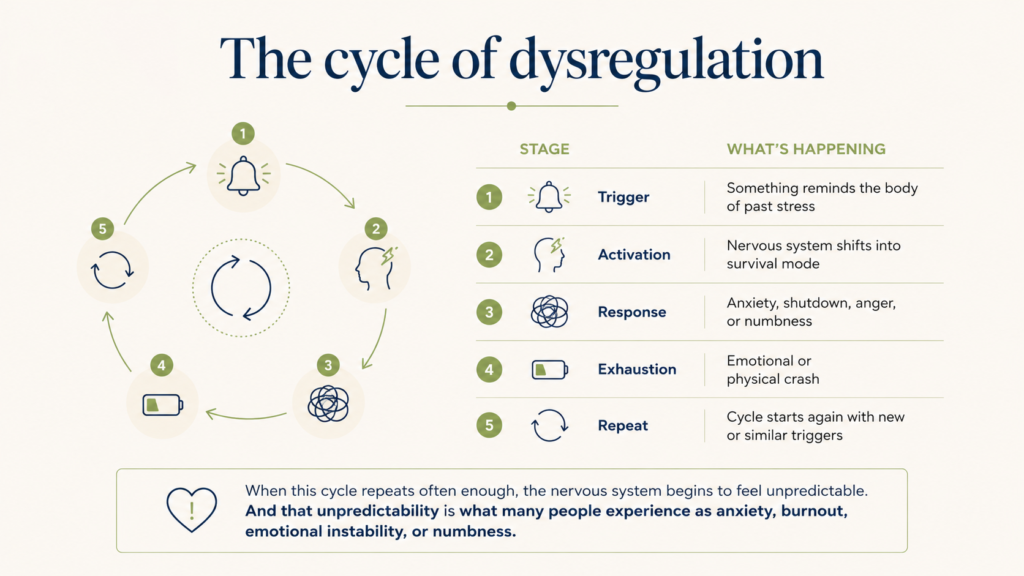
So when something overwhelming happens, whether it’s a single traumatic event or ongoing emotional stress, your body automatically shifts into survival mode.
Now, here’s how nervous system stays stuck in survival mode
When your brain senses threat, it activates the survival system almost instantly. This is where the well-known responses like fight, flight, freeze, and fawn come in, and where emotional flashbacks can surface without an obvious trigger.
These are not personality traits. They are automatic nervous system responses designed to protect you.
Now in a healthy nervous system, once the threat passes, the body naturally returns to calm.
But in many people experiencing trauma or chronic stress, that return to calm doesn’t fully happen. The nervous system stays stuck in survival mode and nervous system dysregulation begins.
But why does your nervous system get stuck?
When stress or trauma is too intense, or they happen too often, your nervous system can start to lose flexibility.
Here, instead of completing the stress cycle, the system gets interrupted. So what happens instead is:
- Your body stays activated even after the danger is gone
- Or it shuts down as a protective escape
- Or it starts switching unpredictably between both
Over time, this becomes your new normal. Not because your body is broken, but because it adapted to survive.
In my own experience practicing trauma therapy, I have realized that the nervous system learns from experience.
So if safety was inconsistent, overwhelming, or missing altogether, the system adapts by staying alert or shutting down more easily.
How to regulate your nervous system and start healing dysregulation?

Now that you understand what nervous system dysregulation is and how it develops, your next question might be: So how do I actually fix it?
My honest answer is, this isn’t about fixing your nervous system like something is broken. It’s more about slowly re-training it.
Here, you’re basically helping your body learn something new: That it is safe enough in the present moment.
This is where real healing starts.
Starting therapy is usually the best solution because therapists use somatic and EMDR therapy for PTSD recovery.
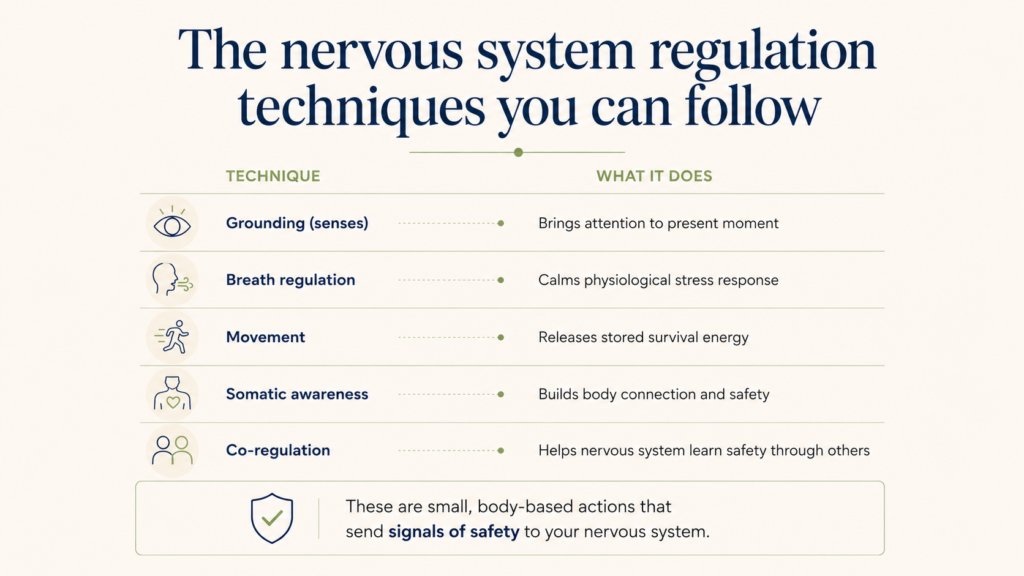
But even if you’re not starting therapy today, you can still follow some nervous system regulation techniques yourself. This includes:
1. Grounding through your senses
One of the fastest ways to bring your system back to the present is through your senses. This is what is called orienting, or grounding.
Here’s what I suggest you do for grounding:
- Look around the room slowly
- Name 5 things you can see
- Notice colors, shapes, textures
- Feel your feet on the ground
This tells your nervous system: I am here. I am safe right now.
2. Breath regulation (without forcing it)
Breathing is directly connected to your nervous system state.
But the goal is not deep breathing in a forced way. Instead, you should focus on:
- Slower exhale than inhale
- Gentle breathing through the nose if possible
- Letting the breath settle naturally
Even 1-2 minutes can start to shift activation.
This is one of the most common nervous system regulation techniques used in therapy.
3. Movement to release stored stress
When the body is stuck in survival mode, it often needs completion through movement. This can include:
- Walking
- Stretching
- Shaking your hands or legs gently
- Rolling your shoulders
- Light dancing
This helps discharge built-up stress energy. That’s because trauma is not only emotional, it is also physical activation in the body.
4. Somatic awareness (noticing without judging)
This is a core part of somatic work.
Here, instead of trying to change your feelings immediately, you try to notice things such as:
- Where do I feel tension in my body?
- Is my chest tight? Is my stomach heavy? Are my shoulders tense?
- What happens if I just observe it for a few seconds?
These somatic exercises for nervous system regulation build a relationship with your body again. And over time, it reduces fear of internal sensations.
5. Safe connection (co-regulation)
One of the most powerful regulators of the nervous system is another safe person. This is called co-regulation.
Here’s what it can look like for you:
- Talking to someone who feels calm and grounded
- Sitting with a trusted person
- Feeling emotionally held in conversation
- Even being around a calm presence without talking
Your nervous system learns safety through relationships. This is why isolation makes dysregulation worse.
When should you seek somatic therapy nervous system dysregulation?
While self-regulation techniques help, if you notice deeper patterns of nervous system dysregulation, you should seek nervous system regulation therapy.
This is where nervous system regulation therapies such as somatic therapy come in.
The therapy focus on:
- Helping your body process stored stress responses
- Teaching your nervous system how to return to safety
- Working with trauma patterns in a gradual, safe way
- Building emotional regulation from the body upward
As a licensed Denver therapist, I help you process stress, anxiety, and past trauma in a safe, grounded space.
Final words
Nervous system dysregulation is not a personal flaw, it’s a survival pattern. And it develops when your body has had to adapt to stress, overwhelm, or emotional unpredictability for too long.
Now, while it can feel frustrating, it’s important you know that your nervous system can learn safety again.
Yes, it doesn’t work instantly But consistent, gentle experiences do help your body realize that you are no longer in danger.
And that is where healing begins.
Got more questions or looking for a therapist in Denver?
You can get in touch with me!
At 12:2 Counseling, I help you regulate your nervous system using grounded, somatic-informed approaches that focus on helping your system feel safe again.
My sessions are available in-person in Denver and virtually across Colorado.
FAQs about nervous system dysregulation
What is nervous system dysregulation?
Nervous system dysregulation happens when the body gets stuck in survival states like fight, flight, freeze, or fawn, instead of returning to calm after stress.
What are signs of a dysregulated nervous system?
Common signs include anxiety, emotional numbness, irritability, fatigue, overthinking, sleep issues, and feeling easily overwhelmed.
How does trauma affect the nervous system?
Trauma can keep the nervous system in a heightened or shutdown state, making it harder for the body to feel safe even when danger is gone.
How to regulate your nervous system naturally?
You can use grounding techniques, breathwork, movement, somatic awareness, and safe connection to help regulate your nervous system.
Can nervous system dysregulation be healed?
Yes, over time the nervous system can learn regulation again through consistent safety-based experiences and somatic approaches.
Licensed Professional Counselor Candidate , MA, LPCC
Kim Hernandez is founder of 12:2 Counseling in Denver, helping individuals address trauma, anxiety, addiction-related patterns, and burnout through EMDR, somatic therapy, CBT, and compassionate body-mind-spirit care that supports steadier relationships, emotional freedom, and lasting change forward.