
An Anxiety Therapist in Denver Who Understands You

If you’re living with anxiety, you may look capable and composed on the outside while feeling restless, tense, or overwhelmed inside. I help you feel calmer, clearer, and more in control of your thoughts and reactions.
 One on One therapy in Denver
 Colorado licensed
  Telehealth across Colorado
One on One therapy in Denver
Colorado licensed
Telehealth across Colorado
Telehealth across Colorado
One on One therapy in Denver
Colorado licensed
Telehealth across ColoradoWhat Is Anxiety?
Anxiety isn’t just worry. It’s when your mind and body stay in a constant state of alert, scanning for problems, replaying conversations, or anticipating what could go wrong. Many adults I see for anxiety therapy in Denver are responsible and driven. Yet internally, they feel exhausted from overthinking and self-pressure.
You might be dealing with anxiety if you notice:
-

Constant overthinking or racing thoughts
-
Difficulty relaxing, even during downtime
-
Muscle tension, headaches, or fatigue
-
Trouble sleeping or shutting your mind off
-
Irritability or feeling easily overwhelmed
-
Avoiding situations that trigger fear or discomfort


Why Does Anxiety Feel Everlasting
Anxiety isn’t simply a mindset issue. It’s a nervous system pattern that keeps firing, even when you’re safe. In our anxiety treatment in Denver, I help you understand both the thoughts driving your worry and the physical stress responses underneath them. Together, we work to calm both.
How I Approach Anxiety Therapy in Denver
As your anxiety therapist in Denver, I don’t just focus on positive thinking. I help you build practical tools so your mind and body can respond differently to stress.
Here’s how I approach anxiety therapy:
I use CBT to identify and shift thought patterns that fuel worry and self-criticism.
I teach you nervous system regulation techniques to reduce anxiety.
I work on confidence-building to help you face situations you’ve been avoiding.

What You Can Expect From Your Anxiety Therapy
If you’re just starting anxiety therapy in Denver, you may wonder what actually changes. The shifts are often steady and practical, and they start to show up in your daily life.
Adults Respond to Anxiety with Greater Calm
They gain practical tools to interrupt racing thoughts before they escalate.
Restless People Sleep More Restfully
Their minds slow down at night, allowing for deeper, more restorative sleep.
Professionals Feel More Confident in Daily Life
They approach work, relationships, and decisions with greater steadiness and ease.
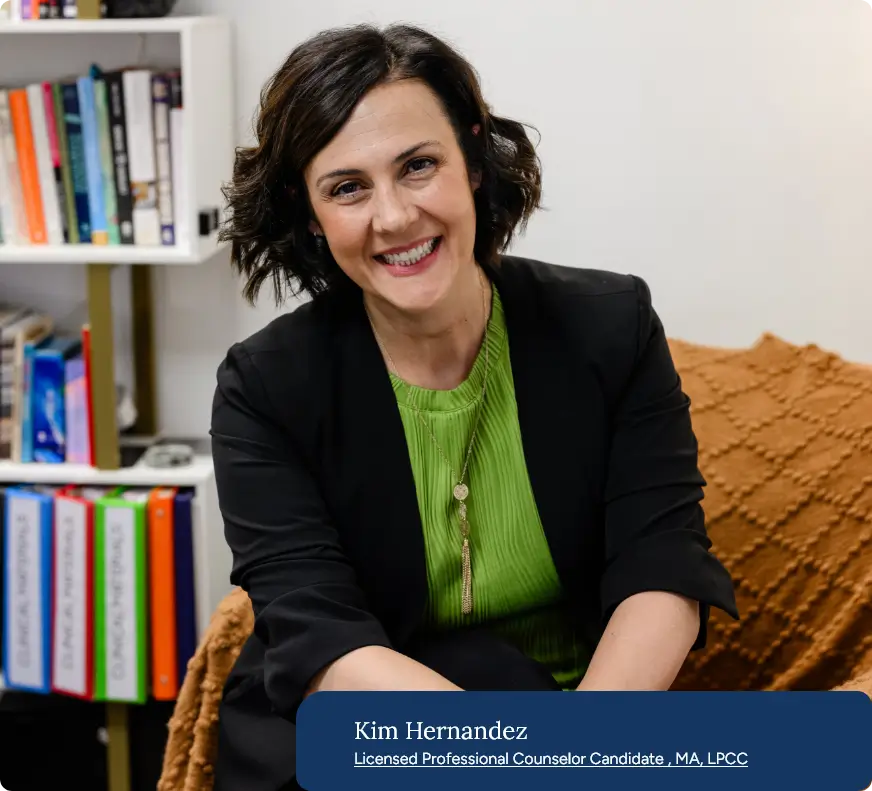
Your Denver Anxiety Therapist
Hi, I’m Kim. If you’re here, anxiety may be taking up more space in your life than you’d like. As an anxiety therapist in Denver, CO, I work with adults who appear strong and capable but feel internally overwhelmed.
I understand how easy it is to normalize constant worry. In our anxiety counseling, we move at your pace, building skills that create real, lasting calm rather than temporary reassurance.
Questions Clients Often Ask Me
Unsure whether anxiety treatment in Denver is right for you? Here are common questions I hear from adults starting anxiety therapy.
How do I know if I need an anxiety therapist in Denver?
If worry feels constant, affects your sleep, work, or relationships, speaking with an anxiety therapist can help clarify your next steps.
How long does anxiety therapy take?
It depends on your goals and history. Some clients feel relief within weeks, while others continue longer for deeper anxiety treatment in Denver CO.
Is anxiety counseling in Denver effective for successful professionals?
Yes. Many high-achieving adults benefit from learning how to regulate overthinking and internal pressure.
What types of anxiety do you treat?
I provide anxiety therapy in Denver for generalized anxiety, social anxiety, performance anxiety, and work-related stress.
Will therapy change my personality?
No. Anxiety treatment is about reducing excessive fear and tension, not changing who you are.
Can anxiety therapy help if I’ve struggled for years?
Absolutely. Long-term anxiety patterns can shift with consistent, structured support and practical tools.
