Feeling Disconnected From Your Partner? 11 Reasons It Happens (And How to Reconnect)

Written By
Kim Hernandez

One of the hardest things about feeling disconnected from your partner is that it doesn’t happen because of one big problem.
This is also why many couples don’t even notice it happening at first. You still live together, care for each other, and go about your daily routines.
But somewhere along the way, the relationship starts to feel different. Maybe your conversations have become shorter, or maybe you feel more like roommates than romantic partners.
And this is more common than you think. Couples do experience periods of emotional distance in relationships.
Now, while it can feel confusing or even frightening, it doesn’t mean your relationship is falling apart.
A lack of emotional connection is something many couples work through with awareness, honest communication, and the right couples therapy in Denver.
In this blog, I’ll explain the signs of feeling disconnected from partner, what they might be trying to tell you, and how you can begin rebuilding emotional closeness.
So, let’s get started.
Key takeaways
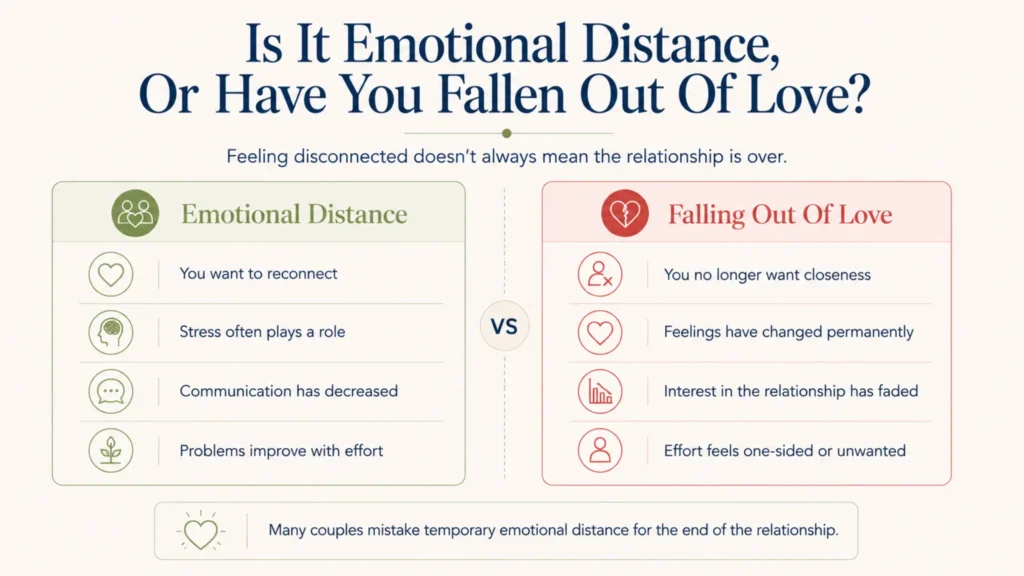
- Feeling disconnected from your partner doesn’t mean you’ve fallen out of love.
- Emotional disconnection in relationships develops gradually rather than overnight.
- Stress, unresolved conflict, busy schedules, and communication patterns can all contribute to emotional distance.
- Small, consistent efforts can rebuild connection more effectively than grand gestures.
- If emotional distance continues despite your efforts, couples therapy can help address the underlying issues.
What does feeling disconnected from partner really mean?

Feeling disconnected from partner simply means you no longer feel as emotionally close, understood, or supported as you once did.
Now, every relationship goes through ups and downs. There will be times when you feel less connected because life gets busy, work becomes stressful, or you’re juggling family responsibilities.
But emotional disconnection in relationships is different. Here, instead of feeling like you’re facing life together, it can start to feel like you’re simply sharing the same space.
For instance, you might still talk every day, but your conversations revolve around schedules, bills, or household responsibilities rather than how you’re actually feeling.
Maybe you spend more time on your phone than talking to each other, or maybe you don’t argue much anymore because you’ve stopped bringing up things that bother you.
Over time, these small changes create emotional distance in relationships without either partner realizing it’s happening.
This is exactly why feeling disconnected catches people by surprise. So much so that couples tell me things like:
- We don’t fight, but we don’t really connect anymore.
- I love my partner, but something feels different.
- I feel lonely even when we’re together.
Bonus: Emotional disconnection is a signal that something in the relationship needs attention, whether that’s communication, quality time, unresolved conflict, lack of stress management.
11 Reasons you’re feeling disconnected from partner
Now that we’ve talked about what lack of emotional connection looks like, let’s see why it happens.
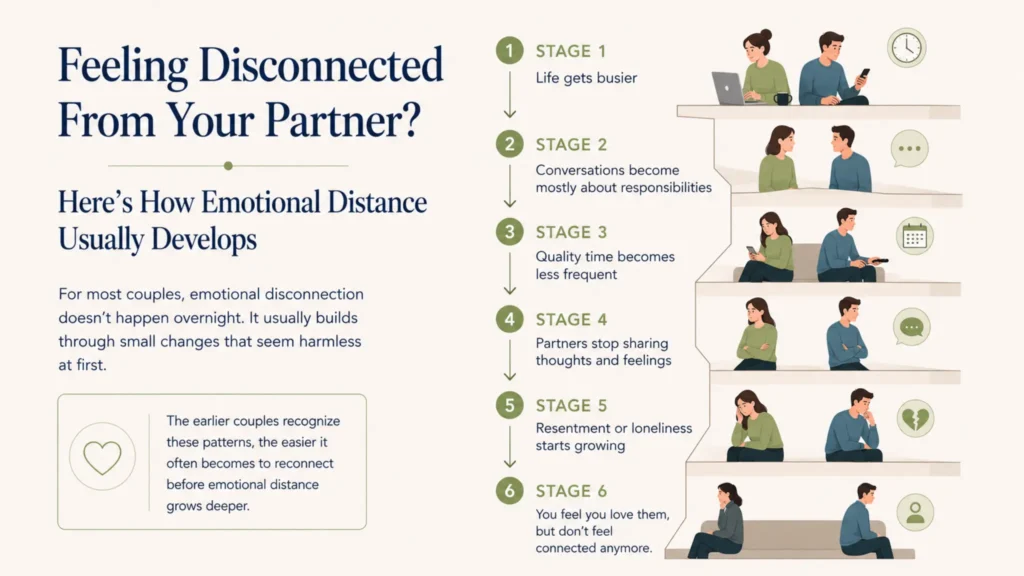
One thing I want to point out is that emotional distance doesn’t appear overnight. Instead, it builds gradually through everyday habits, life changes, and unnoticed relationship patterns that go unnoticed.
That’s why many couples struggle to pinpoint exactly when things started to feel different.
Overall, here are some of the most common reasons you might be feeling disconnected from partner:
1. Life has become so busy that your relationship comes last
Between work, parenting, household responsibilities, and everything else life throws at you, it’s easy for your relationship to move to the bottom of the priority list.
You still care about each other. You’re simply trying to get through each day.
The problem is that emotional connection needs regular attention.
So, if the only conversations you’re having are about grocery lists, bills, or who’s picking up the kids, emotional closeness can slowly start to fade. You might find yourself sharing a home but not really sharing your lives anymore.
2. Your conversations have become practical instead of personal
Healthy relationships need more than communication. They need emotional communication.
For instance, you might talk several times a day, but if every conversation revolves around schedules, chores, or responsibilities, you’re missing opportunities to connect on a deeper level.
Eventually, the relationship can begin to feel routine. You know what’s happening in each other’s calendars, but not necessarily what’s happening in each other’s minds.
That’s one of the most common causes of a lack of emotional connection.
As a licensed Denver therapist, I help you process stress, anxiety, and past trauma in a safe, grounded space.

3. Small conflicts have turned into quiet resentment
Not every relationship struggles because of constant arguments. Sometimes, the opposite is true.
Instead of talking through disagreements, one or both partners start avoiding them.
At first, this might seem like the easier option.
But unspoken frustrations don’t simply disappear. They often turn into resentment, making it harder to feel emotionally close over time.
That’s why avoiding difficult conversations can actually create more emotional distance in relationships than having respectful disagreements.
4. Stress is leaving you with very little emotional energy
Stress affects far more than your mood. It also affects your relationship.
Whether it’s work pressure, financial concerns, health issues, or caring for family members, chronic stress often leaves people with emotional exhaustion, or worse nervous system dysregulation.
And when you’re simply trying to make it through the day, connecting with your partner can unintentionally become an afterthought.
This doesn’t necessarily mean you’ve stopped loving each other. It simply means that you’re both running on empty.
5. One or both of you have stopped sharing what’s really going on
People assume emotional intimacy comes naturally. But in reality, it requires vulnerability.
Some couples stop talking about their fears, disappointments, or personal struggles over time because they don’t want to burden the other person or create conflict.
The problem is that emotional closeness grows through these conversations. And when they stop happening, partners begin to feel like they’re living separate emotional lives.
6. One partner has become emotionally unavailable
Sometimes, emotional distance develops because one partner has difficulty expressing emotions or responding to emotional needs.
Now, this doesn’t always happen intentionally. Some people learned growing up to avoid difficult emotions while others pull away during stressful periods or after being hurt in previous relationships.
Although every relationship is different, some emotionally unavailable partner signs include:
- Avoiding vulnerable conversations
- Struggling to express emotions
- Changing the subject when feelings come up
- Withdrawing after conflict
- Keeping emotional walls up even during good times
This doesn’t automatically mean the relationship can’t improve. But recognizing these patterns is an important first step toward rebuilding connection.
7. Physical intimacy has gradually faded
When people think about intimacy, they often think about sex.
But intimacy is much broader than that. It includes holding hands, hugging, sitting close to each other, sharing affection, and feeling emotionally safe together.
Now, every couple goes through periods where physical intimacy naturally changes. Stress, parenting, health concerns, or busy schedules can all affect it.
The problem is when that distance continues for a long time without either partner talking about it. Over time, this lack of physical and emotional closeness can reinforce each other, making it even harder to reconnect.
8. A major life change has shifted your relationship
Relationships don’t stay the same forever and neither do the people in them.
Major life events like having children, changing careers, moving, losing a loved one, or experiencing health challenges can completely change the rhythm of a relationship.
Sometimes, couples become so focused on adjusting to these changes that they forget to adjust their relationship along with them.
Before they know it, they’re functioning as a team, but not necessarily connecting as partners.
9. One or both of you are struggling with your own mental health
Sometimes, the emotional distance you’re noticing isn’t only about the relationship itself.
Conditions like anxiety, trauma, depression, burnout, or chronic stress can make it difficult to be emotionally present.
For instance, let’s say someone with anxiety has not yet started EMDR therapy for anxiety and they’re feeling overwhelmed. Now, they might withdraw from conversations, lose interest in activities they once enjoyed, or simply have very little emotional energy left at the end of the day.
From the outside, this can look like emotional dissociation in relationships. But in reality, the person might be struggling internally rather than intentionally pulling away.
That’s why it’s important to look at the bigger picture instead of assuming the relationship itself is the problem.
10. You’ve stopped making small efforts to connect
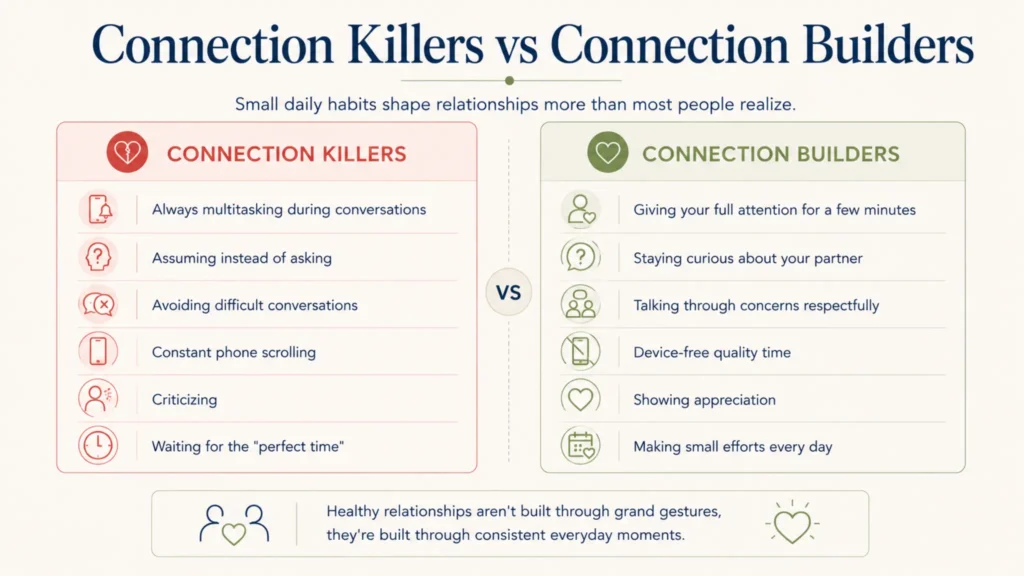
People think healthy relationships are built on grand romantic gestures. But in reality, they’re usually built on small, everyday moments.
Things like asking about each other’s day, sending a thoughtful text, sharing a laugh, or giving your partner a hug might seem insignificant on their own. But they create the emotional closeness that helps relationships feel secure.
When these small efforts slowly disappear, partners begin feeling disconnected without realizing why.
11. You’ve started assuming instead of staying curious
One of the easiest habits to fall into in a long-term relationship is believing you already know everything about your partner.
You stop asking questions, stop checking in, and assume you know how they’re feeling.
The problem is that people continue to grow and change throughout their lives. A partner who felt understood five years ago might not feel understood today.
This is why staying emotionally connected means continuing to learn about each other, even after years together.
Sometimes, one genuine conversation can create more connection than weeks of simply going through the motions.
In short, here’s why you’re feeling disconnected from partner:
| Reason | How It Creates Distance |
| Life gets busy | Your relationship gets less time and attention. |
| Conversations become practical | Emotional intimacy slowly fades. |
| Unresolved conflict | Resentment builds beneath the surface. |
| Ongoing stress | There’s less emotional energy to connect. |
| Less vulnerability | Partners stop sharing their inner world. |
| Emotional unavailability | It becomes harder to meet each other’s emotional needs. |
| Physical intimacy fades | Affection and closeness gradually decrease. |
| Major life changes | Couples adapt to life, but not always to each other. |
| Mental health challenges | Emotional presence becomes more difficult. |
| Small moments disappear | Everyday connection slowly fades away. |
| Curiosity is replaced by assumptions | Partners stop learning and growing together. |
How to reconnect emotionally with partner?

If you’ve been feeling disconnected from partner, it’s easy to assume something is fundamentally wrong with the relationship.
But in many cases, emotional connection isn’t lost forever. It simply needs to be rebuilt.
And more often than not, that happens through small, consistent changes rather than one big conversation.
Here are a few ways you can start reconnecting emotionally with your partner:
1. Talk about the distance instead of pretending it’s not there
One of the biggest mistakes couples make is hoping the feeling will simply go away on its own.
Sometimes it does. But often, emotional distance continues to grow when it isn’t acknowledged.
So try choosing a calm moment to share how you’ve been feeling without placing blame.
For instance, instead of saying you never spend time with me anymore, you can say, I’ve been feeling less connected lately, and I’d like us to work on that together.
That small shift can make the conversation feel much safer for both of you.
2. Make time for connection without waiting to feel like it
Many couples believe they’ll naturally spend more quality time together once they feel close again.
In reality, it’s often the other way around. Connection usually comes first.
Whether it’s sharing dinner without your phones, taking a walk together, or checking in for ten minutes before bed, these small moments help rebuild emotional closeness over time.
They might seem simple, but they’re often where lasting change begins.
3. Be curious about each other again
When you’ve been with someone for a long time, it’s easy to assume you already know what they’re thinking or feeling.
But people change, their goals change, their worries change, and even the way they experience stress can change over time.
That’s why one of the simplest ways to reconnect emotionally with your partner is to become curious again.
Ask questions you haven’t asked in a while. For instance, you can ask:
- What’s been on your mind lately?
- What’s something you’ve been stressed about recently?
- Is there anything you wish we talked about more?
The goal isn’t to solve every problem. It’s simply to understand each other better.
4. Bring back small moments of affection
Emotional connection isn’t built through grand romantic gestures. It’s built through small moments that happen consistently, such as:
- Holding hands during a walk
- Giving your partner a hug before leaving for work
- Sitting together without distractions for a few minutes at the end of the day.
These small acts of affection remind both partners that they’re still choosing each other, even during busy seasons of life.
5. Don’t wait until the problems feel big enough
One reason emotional disconnection in relationships becomes harder to fix is that many couples wait too long to talk about it.
They assume things will improve once work becomes less stressful, after the kids get older, or after life settles down.
But life rarely slows down on its own. That’s why it’s better to address emotional distance while it still feels manageable rather than waiting until resentment has built up.
6. Consider couples therapy if you’re feeling stuck
Sometimes, despite your best efforts, the same patterns might keep repeating.
And that’s okay.
A therapist isn’t there to decide who’s right or wrong.
Instead, they help both partners understand what’s creating the emotional distance and teach healthier ways to communicate, reconnect, and work through challenges together.
Many couples seek therapy because they’re already struggling. But it can be just as valuable when you notice the first signs of disconnection and want to strengthen your relationship before things become more difficult.
In short, here’s how to reconnect emotionally with partner:
| Ways to reconnect | Why they help |
| Talk openly about the distance | Creates understanding instead of assumptions. |
| Spend intentional time together | Rebuilds emotional closeness through shared experiences. |
| Stay curious about each other | Helps partners feel heard, understood, and valued. |
| Show small acts of affection | Reinforces emotional and physical connection. |
| Address concerns early | Prevents resentment from building over time. |
| Consider couples therapy | Provides guidance when you’re struggling to reconnect on your own. |
When should you seek therapy for emotional disconnection?
Every relationship goes through seasons where partners feel less connected.
That, by itself, isn’t unusual.
However, if the emotional distance has continued for months, conversations keep turning into arguments, or you’ve stopped talking altogether, it might be worth reaching out for professional support.
The same is true if one or both partners are feeling lonely in the relationship despite wanting things to improve.
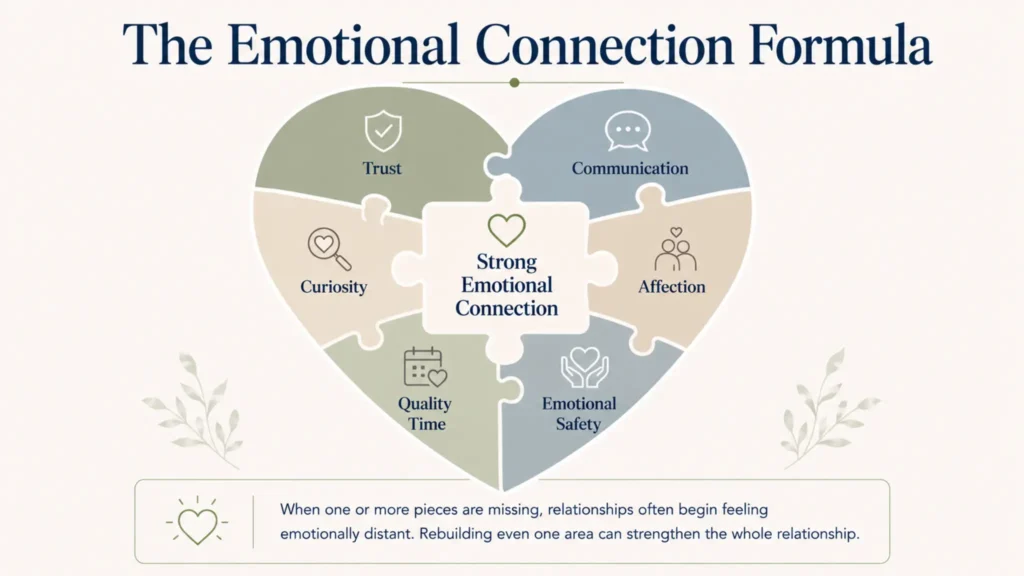
Couples therapy can help uncover patterns that are difficult to recognize on your own and create a safe space to rebuild trust, communication, and emotional closeness.
Seeking help doesn’t mean your relationship has failed. It simply means you’re both committed to making it stronger.
As a licensed Denver therapist, I help you process stress, anxiety, and past trauma in a safe, grounded space.
To sum up
Feeling disconnected from partner can be painful. It can leave you wondering whether something is wrong with your relationship, or whether you’ve simply grown apart.
But as you’ve seen, emotional distance is the result of small patterns that develop over time rather than one major event. And those patterns can change.
Couples are able to rebuild the emotional connection they thought they had lost by communicating openly, making time for each other, showing consistent affection, and addressing problems before they grow.
Looking for a couples therapist in Denver?
You can get in touch with me!
At 12:2 Counseling, I work with individuals and couples who are experiencing emotional disconnection, communication challenges, and relationship stress.
Together, we’ll explore what’s creating the distance in your relationship and develop practical strategies to help you reconnect in a healthier, more meaningful way.
I offer in-person therapy in Denver and virtual sessions across Colorado.
FAQs about feeling disconnected from partner
Why do I feel disconnected from my partner even though I still love them?
It is possible to love your partner and still feel emotionally disconnected. Stress, unresolved conflict, busy schedules, changes in life circumstances, or a lack of meaningful communication can all create emotional distance without changing how you feel about each other.
Is feeling lonely in a relationship normal?
It can be.
People experience periods of loneliness even in loving relationships, especially during stressful life transitions.
However, if those feelings continue for a long time, it’s worth exploring what’s contributing to the lack of emotional connection.
Does emotional distance mean the relationship is over?
Not necessarily.
Emotional distance in relationships is often a sign that something needs attention, not that the relationship is beyond repair.
Many couples successfully rebuild emotional closeness through honest communication, intentional effort, and, when needed, therapy.
How can I reconnect emotionally with my partner?
Start by talking openly about how you’ve been feeling without blaming your partner. Spending intentional time together, asking meaningful questions, showing affection, and addressing concerns early can all help rebuild emotional connection.
What are some emotionally unavailable partner signs?
Some common signs include avoiding emotional conversations, struggling to express feelings, withdrawing after conflict, dismissing emotional needs, or keeping others at a distance emotionally.
These patterns don’t always mean someone doesn’t care, but they can make connection more difficult.
How do I know if we need couples therapy?
If you’ve tried talking about the problem but continue feeling disconnected, stuck in the same patterns, or emotionally distant for several months, couples therapy can help.
A therapist can help you identify underlying issues and develop healthier ways of communicating and reconnecting.
Can emotional disconnection in relationships be fixed?
In many cases, yes.
Emotional disconnection often develops gradually and it can be a result of one or both partner’s past trauma, emotional neglect in childhood, or present stress or anxiety. And it can be rebuilt gradually.
With consistent effort, open communication, and the right support, many couples are able to strengthen their relationship and feel close again.
Licensed Professional Counselor Candidate , MA, LPCC
Kim Hernandez is founder of 12:2 Counseling in Denver, helping individuals address trauma, anxiety, addiction-related patterns, and burnout through EMDR, somatic therapy, CBT, and compassionate body-mind-spirit care that supports steadier relationships, emotional freedom, and lasting change forward.