What Is EMDR And How Does It Work? A Simple Guide

Written By
Kim Hernandez

If you’ve been dealing with anxiety, stress, or memories that just don’t seem to lose their emotional weight, you’ve probably come across the term EMDR therapy.
Maybe you read about it online, or maybe your therapist recommended it to you.
And naturally, you might have questions like:
What is EMDR?
How does it work?
And why do so many therapists recommend it?
Now, I want to start by saying this: EMDR can seem unfamiliar at first, but it is one the most common solutions therapists use. And trust me, it is way more straightforward than it feels.
In this blog, I will walk you through all things EMDR therapy in Denver. You’ll know:
- What EMDR means
- How does EMDR work in Colorado
- What a typical EMDR therapy session feels like
- Why it is effective for certain types of emotional struggles
So, let’s get started.
Key takeaways
- EMDR stands for Eye Movement Desensitization and Reprocessing
- It helps the brain reprocess distressing memories so they feel less intense
- It is commonly used for trauma, anxiety, and emotional overwhelm
- EMDR uses structured phases and guided bilateral stimulation
- It is considered a safe, evidence-based therapy approach
- Many people notice emotional relief after processing stuck memories
What is EMDR therapy?
EMDR stands for Eye Movement Desensitization and Reprocessing.
But you don’t really need to get stuck on the name. What matters is what it actually does.
You see, EMDR is a type of therapy that helps your brain process experiences that still feel emotionally stuck.
These are usually memories that don’t feel fully in the past yet. They still show up as anxiety, stress, or strong reactions in your day-to-day life.
The goal of EMDR is not to erase what happened. Instead, it is to help your brain store those memories in a calmer, more neutral way so they don’t keep triggering the same emotional response.
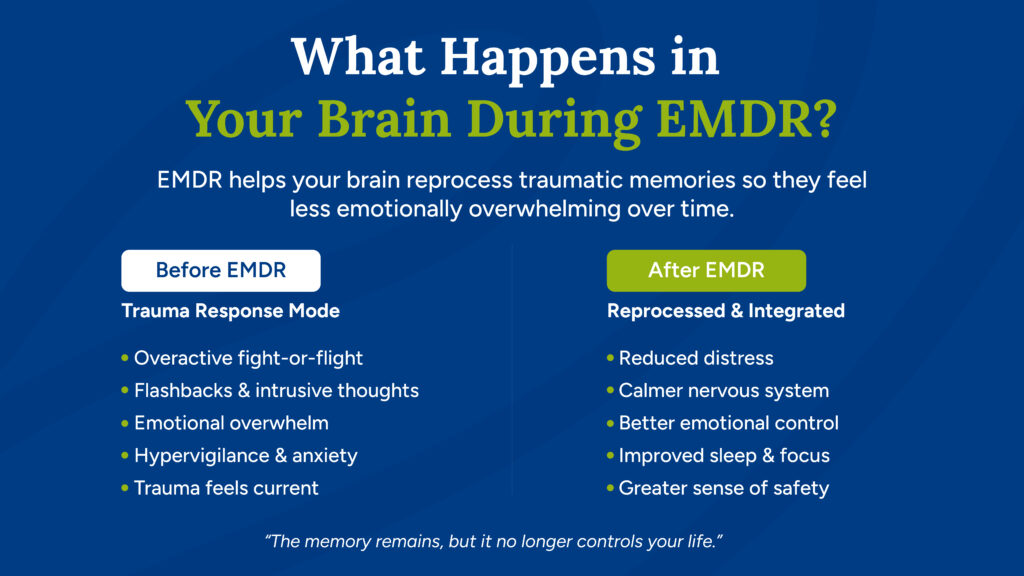
In other words, the memory is still there, but it no longer feels as heavy or overwhelming when it comes up.
As a licensed Denver therapist, I help you process stress, anxiety, and past trauma in a safe, grounded space.

What is EMDR therapy used for?
EMDR is mainly used when past experiences are still affecting how you feel or respond today, even if you logically know you’re safe.
It is commonly used for:
- PTSD therapy and trauma-related symptoms
- Anxiety that feels hard to control
- Panic responses or emotional triggers
- Chronic stress linked to past experiences
- Disturbing or unresolved memories
- Negative beliefs about self (for instance, feelings like “I’m not safe,” “I’m not enough”)
Simply put, EMDR helps your brain process emotional experiences so they stop influencing your present life so strongly.
In short, here’s what EMDR therapy is used for:
| Condition | How EMDR helps |
|---|---|
| PTSD | Reduces trauma triggers |
| Anxiety | Calms overactive stress response |
| Panic | Lowers sudden emotional reactions |
| Stress | Helps process long-term pressure |
| Negative beliefs | Changes stuck self-thoughts |
How does EMDR work in Colorado?
EMDR works by helping your brain reprocess memories that were never fully filed away.
Normally, your brain takes everyday experiences, processes them, and stores them in a way that feels neutral.
But when something is overwhelming or stressful, it can get stuck in its original emotional form.
That’s when certain memories or triggers can still feel intense today, even if the event happened a long time ago.
Now, during EMDR, the therapist guides you to briefly focus on a specific memory while using something called bilateral stimulation. It can be eye movements, tapping, or alternating sounds.
This keeps your brain engaged while it processes the memory in a new way.
Over time, the emotional intensity connected to that memory starts to reduce. You still remember what happened, but it no longer feels as overwhelming or active in your body and mind.
In short, here’s how EMDR therapy works:
| Step | What happens |
|---|---|
| Memory recall | You briefly focus on a memory |
| Bilateral stimulation | Eye movements, tapping, or sounds |
| Brain processing | Memory gets reprocessed differently |
| Emotional shift | Intensity reduces over time |
| Result | Memory feels less triggering |
What happens in an EMDR therapy session?

If you’re wondering what a typical EMDR session actually looks like, I’ve explained all the EMDR steps here.
For starters, you don’t jump straight into difficult memories during a therapy session. Instead, your therapist guides you step by step so the process feels safe and manageable.
The idea is to understand what you’ve been through, prepare your mind and body, and then slowly work through specific memories in a controlled way. And it is done over multiple sessions to help your brain process things without overwhelming you.
Since EMDR is typically completed over multiple sessions, many people also wonder how much does EMDR therapy cost and what factors can affect the overall investment in treatment. It is also worth checking whether EMDR is covered by insurance, because coverage changes the total significantly.
Overall, here’s what happens in an EMDR therapy session in Colorado:
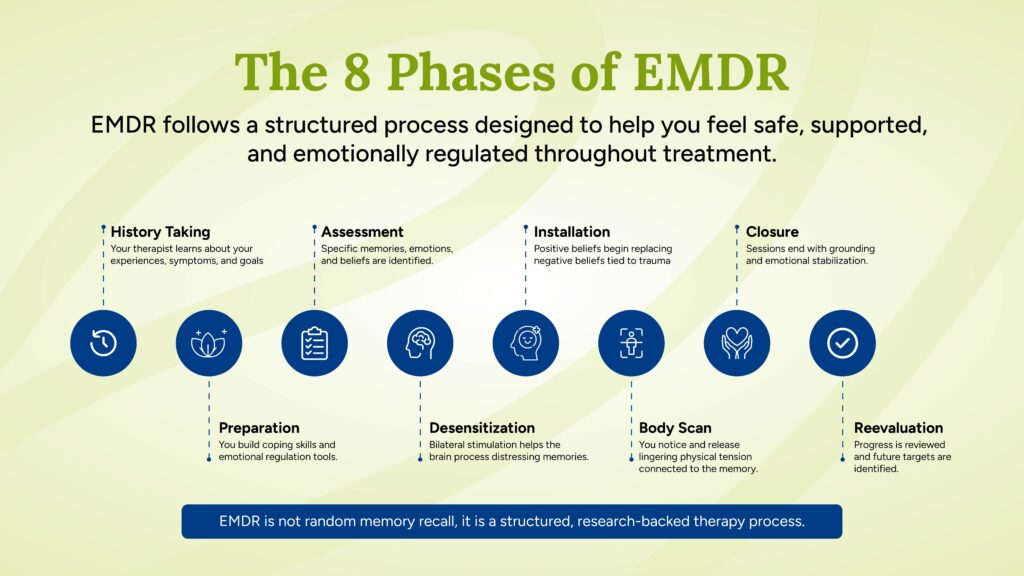
Step 1: History taking
This is where your therapist gets a clear understanding of your background, current struggles, and what you want help with.
Nothing is rushed here. Your therapist will ask about past experiences, emotional triggers, symptoms, and goals for therapy so they can create a treatment plan that feels right for you.
This step is important because it builds safety, trust, and clarity before any deeper work begins.
Step 2: Preparation
Before processing difficult memories, your therapist helps you build coping tools and grounding techniques so you can stay calm and present during sessions.
This might include breathing exercises, visualization techniques, or other ways to regulate emotions when things start to feel overwhelming.
The goal here is to help you feel emotionally prepared and supported before moving into deeper processing work.
Step 3: Assessment
Next, you and your therapist identify specific memories, emotions, beliefs, or situations that still feel emotionally active.
These don’t always have to be major traumatic events. Sometimes it’s the smaller experiences that left a strong emotional impact over time.
Your therapist will also help identify negative beliefs connected to those memories, such as “I’m not safe” or “I’m not good enough.”
The goal is simply to identify what still feels emotionally stuck so it can be processed properly.
Step 4: Desensitization
This is the core part of EMDR therapy. Here, you briefly focus on a memory while doing bilateral stimulation like eye movements, tapping, or sounds.
This helps your brain stay engaged while processing the memory in a different way. Over time, the emotional intensity connected to it often starts to reduce naturally.
A lot of people notice the memory beginning to feel less overwhelming or emotionally reactive as sessions continue.
Step 5: Installation
Once the emotional distress around a memory begins to reduce, your therapist helps strengthen healthier and more supportive beliefs.
This might include thoughts like “I am safe now,” “I did the best I could,” or “I have control over my life.”
The goal here is to replace old negative patterns with more balanced and grounded ways of thinking about yourself and your experiences.
Step 6: Body scan
Trauma and stress are not only stored emotionally, they can also show up physically in the body, which is often what nervous system dysregulation feels like day to day.
During this phase, your therapist might ask you to notice whether there is still any tension, discomfort, tightness, or uneasiness connected to the memory.
This helps identify lingering physical stress responses so they can also be processed and released gradually.
Step 7: Closure
Every EMDR session ends with closure so you leave feeling grounded and emotionally steady.
Your therapist will guide you through calming exercises, breathing techniques, or grounding strategies to help bring your focus back to the present moment.
This step is important because it helps you leave the session feeling safe and supported, even if processing is still ongoing.
Step 8: Reevaluation
At the beginning of future sessions, your therapist checks in to see how things have been feeling since the last appointment.
Together, you review progress, notice any emotional changes, and decide whether more work is needed around certain memories or triggers.
This helps ensure therapy continues moving at a pace that feels effective, safe, and manageable for you.
Is EMDR safe?
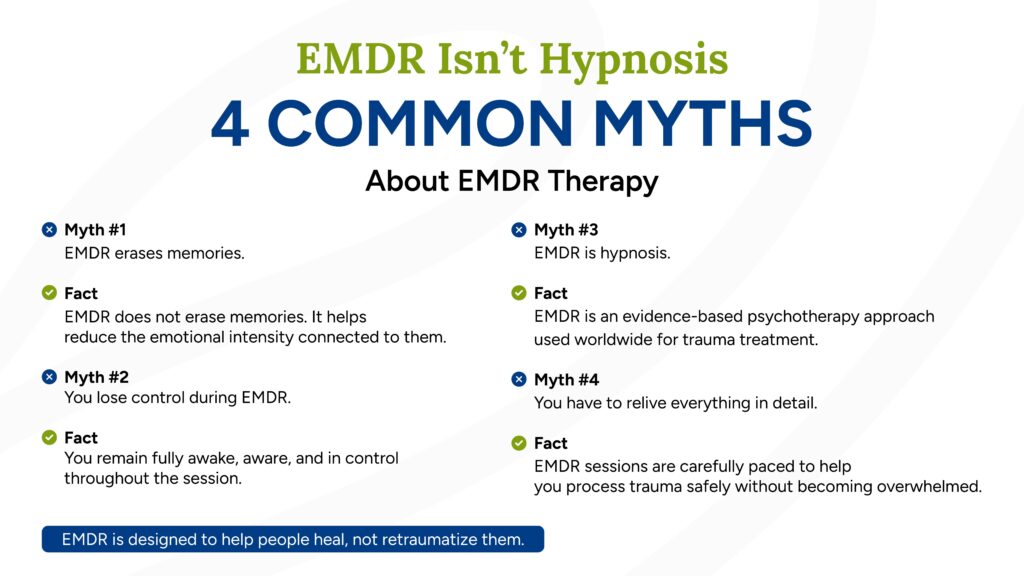
Yes, EMDR is considered a safe and evidence-based form of therapy when it’s done with a trained professional.
In fact, it is widely used in clinical settings, especially for trauma and anxiety-related concerns.
That said, it’s normal for emotions to come up during sessions because the process is designed to access and work through stored memories.
But this doesn’t mean you’re left alone with it.
Your sessions are carefully paced, grounding techniques are used throughout, and you’re always in control. Plus, you can pause or stop anytime.
Simply put, the entire process is built around emotional safety and stability.
Can EMDR make things worse?
In the short term, EMDR can feel emotionally intense because it involves working through memories that have been avoided for a long time. And for some people this even becomes the reason to avoid therapy.
For instance, some people notice temporary increases in emotions, vivid dreams, or new insights between sessions as the brain continues processing.
However, this does not mean the therapy is harming you. It is actually part of how the brain reorganizes and releases stored experiences.
A trained therapist carefully paces the process, uses grounding techniques, and ensures you stay within a manageable emotional range.
Is EMDR therapy effective?
Yes, EMDR is widely supported by research and clinical practice, and the evidence behind EMDR for PTSD is especially strong.
People report real improvements after going through the process consistently. This includes feeling less emotionally reactive, reduced anxiety around triggers, and a stronger sense of control over their thoughts and responses.
Also, it can help improve clarity and emotional stability in everyday situations.
While it is not an overnight fix, EMDR is a structured approach that helps the brain process unresolved experiences in a way that creates lasting emotional change over time.
Bonus: EMDR involves working with emotions, not just memories
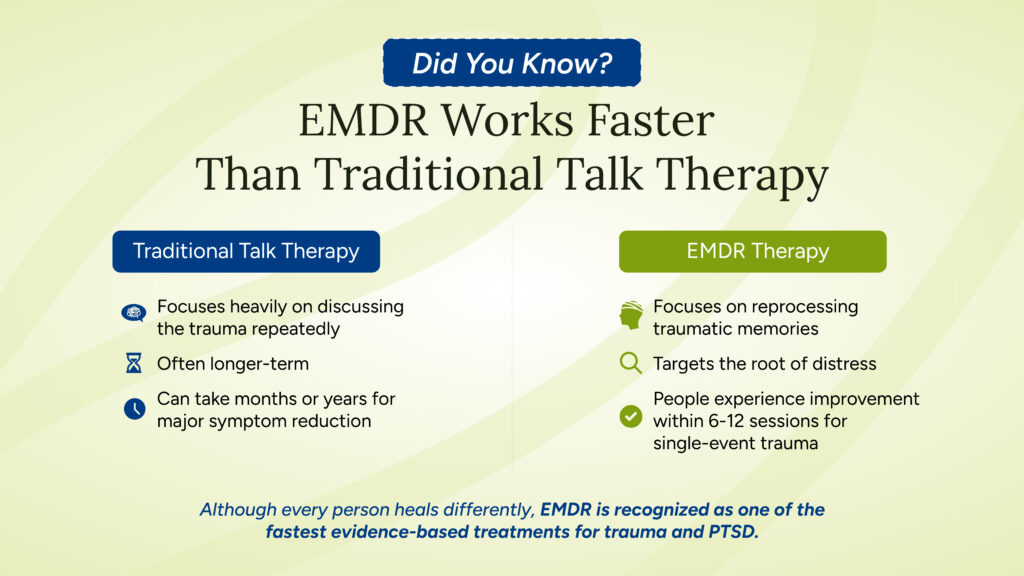
One important thing you should understand about EMDR is that it’s not just about the memory itself. It is also about how that memory feels when you think about it.
For instance, two people can go through a similar experience but carry very different emotional reactions to it, depending on how their brain stored it at the time.
That’s exactly why EMDR focuses on the emotional charge attached to a memory.
The goal is to reduce that emotional intensity so the memory doesn’t trigger the same stress, fear, or discomfort anymore. So, although the memory stays, the emotional reaction to it changes.
As a licensed Denver therapist, I help you process stress, anxiety, and past trauma in a safe, grounded space.
To sum up
I am sure that, by now, you know what is EMDR and how it works in typical EMDR therapy sessions in Colorado.
You see, EMDR is a structured, guided way of helping your brain process experiences that still feel emotionally unfinished.
It doesn’t erase your past. Instead, it helps your brain stop reacting to it as if it’s still happening.
And for many people, that shift alone can create a real sense of relief, clarity, and emotional steadiness.
Curious if EMDR might be right for you?
You can get in touch with me!
At 12:2 Counseling, I bring years of expertise working with successful professionals across Colorado who:
- Manage a lot of responsibility
- Appear composed externally
- But feel internally overwhelmed or reactive
As your therapist in Denver, CO, I use EMDR to not just talk about stress, but to help you process what’s underneath it.
FAQs about EMDR
What is EMDR?
EMDR is a type of therapy that helps your brain process difficult or overwhelming memories in a healthier way. Instead of those memories feeling stuck or emotionally heavy, EMDR helps reduce their intensity over time.
The memory itself doesn’t disappear, but the emotional reaction linked to it becomes much calmer. This makes it easier to think about past experiences without feeling overwhelmed or triggered in the same way as before.
What does EMDR feel like?
EMDR usually feels focused, but not overwhelming. You’re aware of what you’re talking about, but you’re also supported throughout the process.
At times, emotions may come up, but the therapist guides you carefully so it feels manageable.
You are not reliving trauma in full detail. Instead, you’re gently noticing parts of memories while staying grounded in the present moment the entire time.
How long does EMDR take to work?
There’s no fixed timeline for EMDR because everyone processes things differently. Some people notice small changes within a few sessions, while others with deeper or more complex experiences may need more time.
It really depends on what you’re working through and how your brain responds to the process.
The important thing is that changes are usually gradual, building over time rather than happening all at once.
What does EMDR help with?
EMDR is commonly used for trauma, PTSD, panic responses, emotional triggers tied to past experiences and anxiety therapy in Denver.
Also, it can help with ongoing stress patterns and negative beliefs like feeling “not safe” or “not good enough.”
In simple terms, EMDR helps reduce how strongly your brain reacts to past events so they don’t keep influencing your present emotions and reactions as intensely as they used to.
Is EMDR therapy safe for anxiety?
Yes, EMDR is widely considered safe for treating anxiety when it’s done with a trained therapist. It is often used to help people who feel constantly on edge or easily triggered.
While emotions can come up during sessions, the process is carefully guided and paced so you don’t feel overwhelmed.
The goal is always to help you feel more stable, grounded, and in control over time.
What happens after EMDR sessions?
After an EMDR session, people often describe feeling emotionally lighter or mentally tired in a calm way. This is normal because the brain is actively processing information.
Over time, many people notice that things that used to trigger strong reactions don’t feel as intense anymore.
Instead of feeling overwhelmed, there’s usually a sense of calm and distance from those past emotional responses.
Licensed Professional Counselor Candidate , MA, LPCC
Kim Hernandez is founder of 12:2 Counseling in Denver, helping individuals address trauma, anxiety, addiction-related patterns, and burnout through EMDR, somatic therapy, CBT, and compassionate body-mind-spirit care that supports steadier relationships, emotional freedom, and lasting change forward.