
When it comes to trauma therapy, EMDR is something almost every therapist will suggest you try.
And it can sound a little unusual at first. You might wonder how a therapy that involves eye movements helps with PTSD.
But here’s the thing: EMDR is much more than just eye movements. It helps your brain and nervous system process traumatic experiences in a healthy way.
You see, PTSD can sometimes make painful memories feel emotionally stuck. So much so that you’ll feel like your mind and body are still reacting to something that happened long ago.
This is exactly what EMDR therapy for PTSD is designed to help with.
In this blog, I will explain everything. You’ll know:
- How EMDR therapy for PTSD works
- What happens during EMDR sessions
- Whether or not EMDR is effective for PTSD
And a lot more.
So, let’s get into it.
Key takeaways
- EMDR therapy helps people process traumatic memories in a safer and less overwhelming way
- PTSD symptoms often develop when traumatic experiences remain stuck or unprocessed
- EMDR uses bilateral stimulation, like guided eye movements or tapping
- Research shows EMDR is one of the most effective therapies for PTSD
- EMDR does not erase memories, but it can reduce their emotional intensity
- For complex PTSD, EMDR often involves a slower and more gradual approach
- Therapy focuses on emotional safety, nervous system regulation, and trauma processing
- People do notice reduced triggers, anxiety, flashbacks, or emotional distress
First, what is EMDR therapy for PTSD?

EMDR stands for Eye Movement Desensitization and Reprocessing. And it is a trauma-focused therapy that helps you process distressing memories and PTSD symptoms.
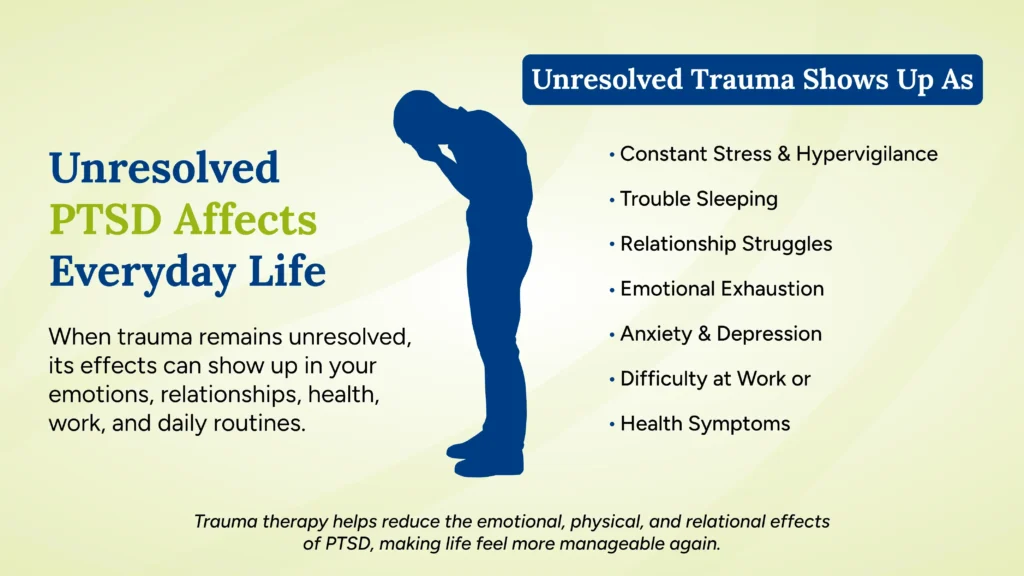
You see, PTSD does not only affect thoughts. It can also affect your nervous system, emotional regulation, sleep, physical tension, relationships, feelings of safety, and everyday reactions to stress.
And often, traumatic memories can begin to feel frozen emotionally.
For instance, even years after a traumatic event, something small might suddenly trigger panic, emotional flashbacks, emotional shutdown, hypervigilance, fear, intense anxiety, or physical stress responses.
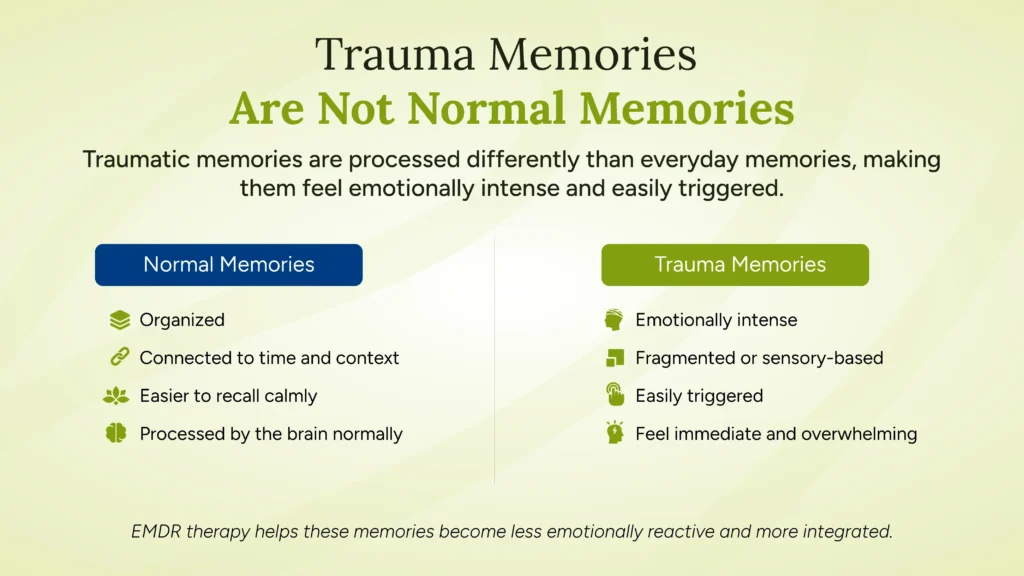
That’s because the brain sometimes stores traumatic experiences differently than normal memories. So, instead of feeling like something from the past, the trauma can continue feeling emotionally present in your body and nervous system.
This is where PTSD therapy in Denver using EMDR helps.
EMDR is designed to help your brain gradually reprocess traumatic memories so they become less emotionally distressing over time.
Meaning even though the memory itself might still exist, it no longer feels as emotionally overwhelming or activating in the same way.
As a licensed Denver therapist, I help you process stress, anxiety, and past trauma in a safe, grounded space.

How does PTSD affect your brain and nervous system?
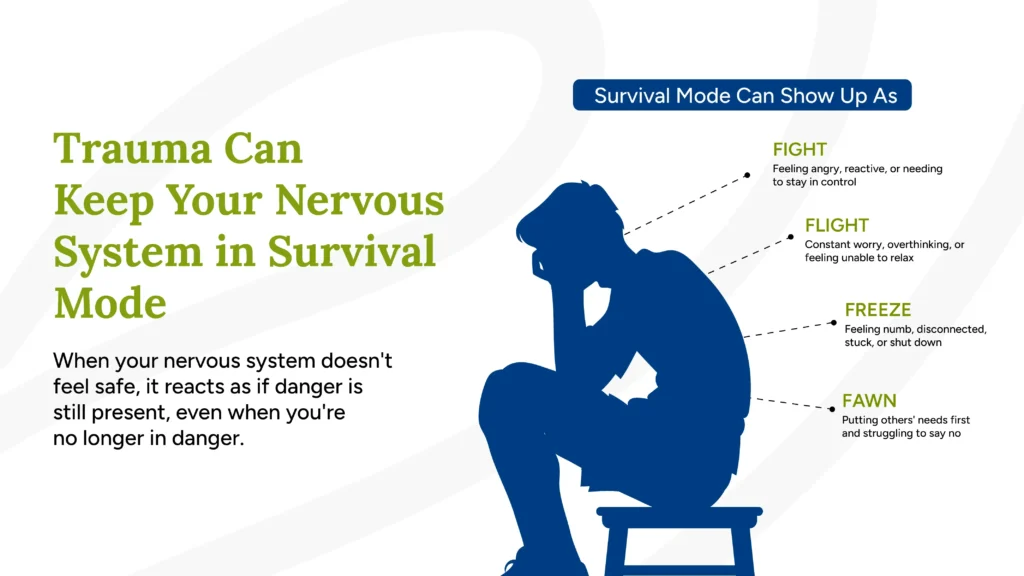
PTSD is not simply overreacting to stress as trauma can significantly affect how your brain and nervous system respond to danger, safety, emotions, and memory processing.
For instance, after a traumatic experience, your brain might begin staying in a constant state of protection. This can look like:
- Feeling constantly on edge
- Struggling to relax
- Avoiding reminders of the trauma
- Feeling emotional numbness
- Having nightmares or flashbacks
- Becoming easily startled
- Feeling unsafe even in non-dangerous situations
Here, your nervous system continues responding as if the threat is still active, even when the traumatic event has already ended.
And according to research, this happens when traumatic memories remain unprocessed or are improperly stored in the brain.
So instead of fully integrating into normal memory networks, the experience stays emotionally reactive.
So, how does EMDR therapy for PTSD work?

At its basic, EMDR therapy helps your brain process traumatic memories while keeping you grounded in the present moment.
During EMDR sessions, your therapist guides you through certain memories, emotions, physical sensations, or beliefs connected to the trauma. Also, they use something called bilateral stimulation which involves:
- Guided eye movements
- Alternating tapping
- Audio tones moving from side to side
This helps your brain process traumatic experiences in a more adaptive way. And over time, this can reduce the emotional intensity attached to traumatic memories.
For instance, a memory that once triggered panic, shame, fear, or emotional overwhelm might gradually begin to feel more distant, manageable, or emotionally neutral.
This does not mean the experience suddenly becomes okay. But your nervous system no longer reacts with the same level of distress every time the memory surfaces.
In short, here’s how EMDR therapy works for PTSD:
| EMDR Element | Purpose |
| Eye movements | Support trauma processing |
| Bilateral stimulation | Helps the brain reprocess memories |
| Grounding techniques | Maintain emotional safety |
| Trauma reprocessing | Reduce emotional intensity |
| Positive beliefs | Build healthier emotional responses |
What happens in EMDR sessions for PTSD?
A common misconception people have is that EMDR therapy for trauma and PTSD immediately jumps into traumatic memories right away.
But good trauma therapy usually does not work like that.
Instead, it follows a structured process where the treatment is divided into eight phases of EMDR designed to help you move through trauma processing gradually and safely.
Here’s what happens in EMDR treatment for PTSD:
| EMDR Phase | What Happens |
| History & assessment | Therapist learns about your experiences, symptoms, and goals |
| Preparation | You develop grounding tools and emotional regulation skills |
| Identifying targets | Specific memories, beliefs, or triggers are identified |
| Reprocessing | Bilateral stimulation is used while processing memories |
| Installing positive beliefs | Healthier emotional beliefs are strengthened |
| Body awareness | Physical tension or distress patterns are noticed and processed |
| Closure | Sessions end with grounding and stabilization |
| Reevaluation | Progress is reviewed over time |
Does EMDR work for PTSD?
Yes, it does.
In fact, EMDR is considered one of the most researched trauma therapies available today.
So much so that organizations like the American Psychological Association (APA), World Health Organization (WHO), and Department of Veterans Affairs have all recognized EMDR as an effective treatment for PTSD.
Now, this does not mean EMDR works perfectly for every single person in exactly the same way.
Therapy is still personal. And trauma recovery can look different for different people.
But overall, research consistently shows that people experience meaningful improvement in flashbacks, nightmares, anxiety, emotional overwhelm, hypervigilance, trauma triggers, shame, and negative self-beliefs after EMDR treatment.
How does EMDR help PTSD symptoms?

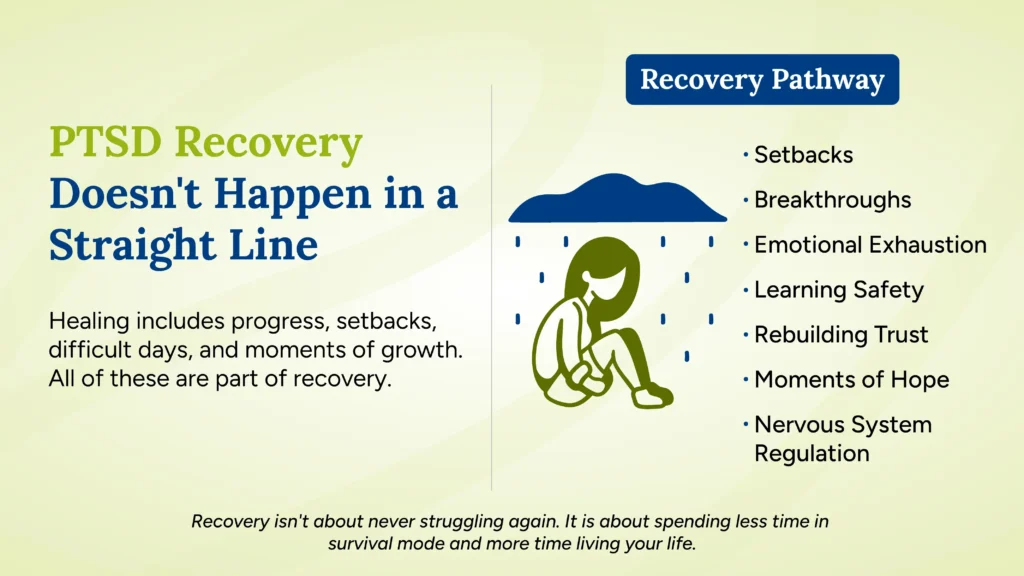
People often expect immediate emotional relief from therapy. But trauma healing usually happens more gradually than that.
And with EMDR, the shifts can sometimes feel subtle at first. For instance, you might begin noticing the following:
- Certain memories feel less emotionally intense
- Triggers become more manageable
- Your body feels calmer in situations that once caused panic
- Your stop replaying certain experiences constantly
- Your sleep improves
- Emotional reactions feel less overwhelming
- Shame or self-blame starts decreasing
And let me tell you these changes can be life-changing in the long-run. That’s because PTSD keeps you stuck in survival mode emotionally and physically.
So when your nervous system slowly begins feeling safer again, you’ll notice improvements not only in trauma symptoms but also in relationships, emotional connection, daily functioning, confidence, focus, and self-trust.
This is especially true if you have spent years feeling emotionally exhausted from constantly managing anxiety, fear, or hypervigilance internally.
Is EMDR effective for complex PTSD?
Complex PTSD, or C-PTSD, looks very different from single-event trauma.
You see, complex PTSD is usually connected to repeated or long-term experiences such as childhood trauma, emotional neglect, chronic abuse, toxic relationships, ongoing instability, or repeated relational trauma.
And because these experiences happen over time, they can affect identity, emotional regulation, self-worth, relationships, nervous system functioning, and feelings of safety and trust.
Now, EMDR therapy for complex PTSD does work, but it requires a slower and more layered approach.
For instance, before deeper trauma processing begins, therapists might spend significant time helping you build:
- Emotional regulation skills
- Grounding strategies
- Internal safety
- Nervous system stabilization
- Healthy boundaries
- Trust within the therapeutic relationship
Much of this early work is about widening your window of tolerance so processing stays manageable. Also, you might experience meaningful shifts, but there can be ups and downs throughout the process.
Bonus: Unlike traditional therapy you don’t have to talk about every trauma during EMDR, here’s why
| Traditional Trauma Talk Therapy | EMDR Therapy |
| Involves detailed retelling | Involves less verbal detail |
| Focuses heavily on discussion | Focuses on processing experiences |
| Can feel emotionally exhausting | Therapy is more contained |
| Primarily cognitive | Includes body and nervous system awareness |
How long does EMDR therapy for PTSD take?
There’s no single answer to this because trauma is not the same for everyone.
For instance, if you are processing a single traumatic event, a recent accident,or a specific disturbing memory you might move through EMDR slightly faster.
But healing will take longer for someone working through childhood trauma, long-term emotional neglect, complex PTSD, or repeated relational trauma.
This is why EMDR treatment timelines vary quite a bit.
While some people begin noticing changes within a few sessions, others spend months building emotional safety, regulation skills, and processing layers of trauma gradually.
You might also want to read: How To Find A Therapist In Denver?
As a licensed Denver therapist, I help you process stress, anxiety, and past trauma in a safe, grounded space.
To sum up
I am sure by now you have a clear understanding of how EMDR therapy for PTSD works and why so many trauma specialists use it as part of trauma recovery.
You see, dealing with PTSD is not simply about thinking positively or trying to forget painful experiences. That’s because trauma can deeply affect your nervous system, emotional safety, relationships, self-trust, physical stress responses, and the way you move through everyday life.
And often, trauma memories can continue feeling emotionally active long after the actual danger has passed.
That’s exactly where EMDR therapy helps your brain gradually reprocess traumatic experiences, reducing the emotional intensity connected to painful memories.
Got more questions or want therapy in Denver, CO?
You can get in touch with me!
At 12:2 Counseling, I help people work through trauma, anxiety, emotional overwhelm, and nervous system dysregulation in a grounded and supportive way.
And if you are considering EMDR therapy for trauma or PTSD, my therapy sessions are available both in-person in Denver and virtually throughout Colorado. Many clients also ask whether EMDR is covered by insurance before booking.
FAQs about EMDR therapy for PTSD
What is EMDR therapy for PTSD?
EMDR stands for Eye Movement Desensitization and Reprocessing. It is a trauma-focused therapy designed to help people process distressing memories and reduce PTSD symptoms over time.
Does EMDR work for PTSD?
Research shows that EMDR is highly effective for many people with PTSD. It is recognized by organizations like the APA, WHO, and the U.S. Department of Veterans Affairs as an evidence-based trauma treatment.
How does EMDR help PTSD?
EMDR helps the brain reprocess traumatic memories so they no longer feel as emotionally overwhelming or triggering in the present moment.
Is EMDR effective for complex PTSD?
Yes, EMDR therapy for complex PTSD can be very helpful, especially when combined with strong emotional regulation and stabilization work. Treatment is often paced more gradually for complex trauma.
What happens in EMDR for PTSD sessions?
EMDR sessions usually involve discussing symptoms, identifying traumatic memories, learning grounding skills, and using bilateral stimulation while processing distressing experiences safely.
Is EMDR safe for PTSD?
EMDR is generally considered safe when done with a properly trained therapist. However, trauma processing can bring up strong emotions, which is why pacing and emotional safety are important parts of treatment.
How long does EMDR therapy take?
The timeline varies depending on the person, their trauma history, and the complexity of symptoms. Some people notice changes relatively quickly, while others benefit from longer-term therapy.
Do you have to talk about every traumatic detail in EMDR?
Not necessarily. Unlike some traditional trauma therapies, EMDR does not always require someone to verbally describe every detail of their trauma repeatedly for the therapy to work.

Licensed Professional Counselor Candidate , MA, LPCC
Kim Hernandez is founder of 12:2 Counseling in Denver, helping individuals address trauma, anxiety, addiction-related patterns, and burnout through EMDR, somatic therapy, CBT, and compassionate body-mind-spirit care that supports steadier relationships, emotional freedom, and lasting change forward.