Everything You Need To Know About EMDR Therapy For Anxiety

Written By
Kim Hernandez

For those of you who’ve been dealing with anxiety for a while now, you already know that it is not just about what’s happening right now.
Sometimes, the feeling shows up out of nowhere. Sometimes, it feels bigger than the situation.
And no matter how much you try to think it through, it just doesn’t settle.
This is usually when you start looking for therapy and come across solutions like EMDR therapy.
You see, for anxiety that feels deeply rooted or hard to explain, solutions like EMDR help significantly.
Although it takes time and feels long-drawn, EMDR can actually help you feel grounded and more neutral.
In this blog, I will walk you through everything you need to know about EMDR therapy for anxiety. You’ll know:
- How EMDR works for anxiety
- Why it’s used for certain types of anxiety
- What happens during sessions
- And whether it might be the right fit for you
So, let’s get started.
Key takeaways
- EMDR therapy helps the brain process experiences linked to anxiety
- It is commonly used for anxiety disorders, trauma, and emotional triggers
- EMDR does not erase memories but reduces their emotional intensity
- It uses structured phases and bilateral stimulation
- Many people notice reduced anxiety and better emotional regulation over time
- It can also support people dealing with anxiety and depression together
What is anxiety?

To begin with, anxiety is your brain’s natural response to stress or perceived danger. It is part of the body’s built-in alarm system that helps you stay alert and prepared.
But in some people, this system stays switched on even when there’s no real threat. That’s when anxiety starts to feel constant or overwhelming.
You might notice racing thoughts, restlessness, muscle tension, or a sense of unease that doesn’t fully go away.
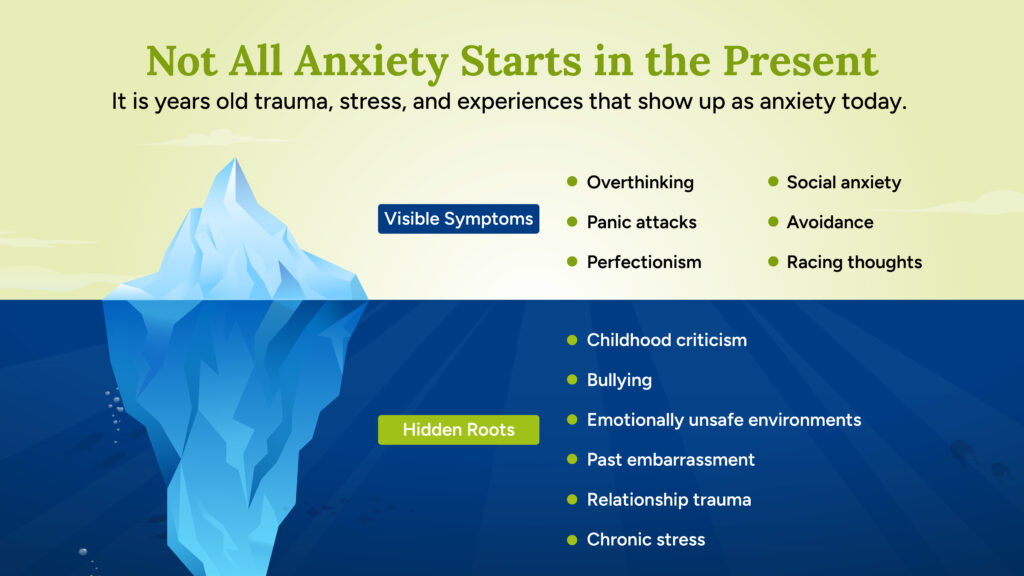
Also, anxiety can be triggered by past experiences your brain hasn’t fully processed yet. So even everyday situations can feel bigger than they actually are.
In short, anxiety is often nervous system dysregulation: your system trying to protect you, just a little too strongly or too often.
What is EMDR therapy for anxiety
EMDR stands for Eye Movement Desensitization and Reprocessing. And it is a type of therapy that helps your brain process experiences that might be contributing to your anxiety.
You see, anxiety isn’t always just about current stress. Sometimes, it’s connected to past experiences that your brain hasn’t fully processed yet.
These experiences can stay active in the background and show up as worry, tension, or emotional overwhelm in everyday life.
This is exactly where EMDR therapy for anxiety comes in.
Instead of only talking through anxiety, EMDR helps your brain reprocess the experiences behind it so they don’t keep triggering the same response.
Here, although the memory doesn’t disappear, the emotional charge attached to it becomes much lighter.
As a licensed Denver therapist, I help you process stress, anxiety, and past trauma in a safe, grounded space.

What types of anxiety can EMDR help with?
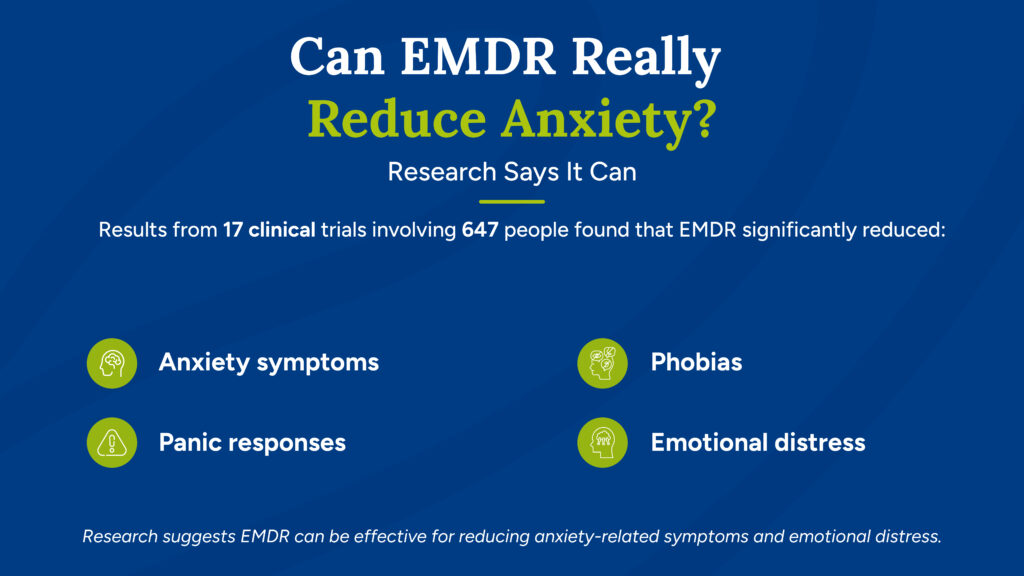
EMDR is often used for anxiety that feels persistent, overwhelming, or difficult to trace back to a single cause. This includes both diagnosed anxiety disorders and more general patterns of stress or worry.
Some of the most common situations where EMDR for anxiety is used include:
- Generalized anxiety (constant worry or overthinking)
- Panic responses or sudden emotional spikes
- Social anxiety or fear-based reactions
- Anxiety linked to past experiences or trauma
- Performance anxiety or pressure-related stress
- Anxiety that feels irrational but very real
If social situations are the main trigger, this guide on finding a therapist for social anxiety goes deeper.
How does EMDR therapy work for anxiety?
To understand how EMDR helps with anxiety, it’s important to you know what’s happening beneath the surface.
You see, your brain is constantly processing experiences. Most of the time, it takes what happens, makes sense of it, and stores it in a way that feels manageable.
But when something feels overwhelming, stressful, or emotionally intense, that process can get interrupted. And when that happens, the experience doesn’t get fully filed away.
Instead, it stays active, almost like it’s still happening in the present. This is often what fuels ongoing anxiety.
Now, EMDR therapy for anxiety works by helping your brain go back and properly process those experiences.
During a session, your therapist will guide you to briefly focus on a specific memory, feeling, or trigger while using something called bilateral stimulation.
This might include:
- Guided eye movements
- Gentle tapping
- Alternating sounds
This is how EMDR reprocessing works: it keeps your brain engaged while it begins to reprocess the experience in a new way.
Over time, something important starts to shift. The past memory is still there, but the emotional intensity attached to it begins to reduce.
So instead of your nervous system reacting strongly, it starts to feel more neutral and manageable.
In short, here’s how EMDR therapy works for anxiety:
| Step | What happens |
|---|---|
| Memory activation | Brief focus on trigger or memory |
| Bilateral stimulation | Eye movement, tapping, or sounds |
| Processing | Brain reprocesses experience |
| Emotional shift | Intensity starts reducing |
| Result | Trigger becomes less reactive |
What happens in EMDR therapy sessions for anxiety?

EMDR therapy sessions for anxiety are very paced and supportive. Here, your therapist helps your nervous system settle first, and then gently works through the experiences that are linked to your anxiety.
Here’s what a typical EMDR therapy session for anxiety involves:
Step 1: Understanding your anxiety patterns
In the beginning, your therapist focuses on understanding how your anxiety shows up in daily life. This includes your triggers, physical symptoms, thought patterns, and any past experiences that may be connected.
You’re also introduced to simple calming techniques so your system feels more grounded before deeper work begins.
This stage is all about creating stability.
Step 2: Finding the root triggers
Next, you and your therapist identify the specific memories, situations, or even body sensations that seem to fuel your anxiety.
Sometimes it’s a clear past event, and other times it’s just a feeling of “something is wrong” that keeps repeating.
The goal is to locate what your brain is still reacting to so it can be processed properly.
Step 3: Processing with bilateral stimulation
This is the core part of EMDR therapy for anxiety. Here, you briefly focus on a target memory while your therapist guides you through bilateral stimulation, like eye movements or tapping.
This helps your brain stay engaged while also processing the memory in a different way. In the long-run, the emotional alarm response linked to that memory begins to soften.
Step 4: Reducing emotional intensity
As the sessions continue, people notice that their anxiety reactions start to change. Things that once felt overwhelming begin to feel less intense.
The memory that triggered anxiety might still be there, but it doesn’t trigger the same physical or emotional response. Instead, it starts to feel more distant, like something that belongs in the past rather than something happening now.
Step 5: Building calmer thought patterns
Once the emotional charge reduces, your therapist helps strengthen more balanced thoughts. These are not forced affirmations, they feel more natural over time.
Thoughts like “I am safe now” or “I can handle this” begin to replace older anxiety-driven beliefs. This helps your brain form a more stable response system.
Step 6: Returning to calm and closure
Every session ends with grounding techniques so you feel steady before leaving. This step is especially important in EMDR therapy for anxiety because it ensures your nervous system returns to a calm baseline.
Even if strong emotions come up during the session, you leave feeling regulated and supported, not overwhelmed.
In short, here’s how EMDR therapy for anxiety works in a typical session:
| Step | Focus |
|---|---|
| 1. Understanding anxiety | Triggers, symptoms, patterns |
| 2. Identifying targets | Memories or emotional triggers |
| 3. Processing | Bilateral stimulation work |
| 4. Emotional reduction | Less reactivity over time |
| 5. Positive beliefs | Calmer thought patterns build |
| 6. Closure | Grounding and emotional stability |
Is EMDR therapy safe for anxiety?
Yes, EMDR is safe when it’s done with a trained professional.
In fact, it is widely used for anxiety therapy, trauma, and emotional overwhelm, and it follows a structured process designed to keep you grounded throughout.
But here’s the catch.
During EMDR therapy for anxiety, emotions can come up.
That’s not because something is going wrong, it’s because your brain is finally processing what it has been holding onto.
But you are not left alone in that process. Your therapist:
- Guides the pace
- Uses grounding techniques
- Checks in regularly
- Helps you stay within a manageable emotional range
And you always have control. You can pause, slow down, or stop at any time.
So overall, EMDR is designed to feel structured, supported, and emotionally safe.
Can EMDR help with anxiety in children and teens?
Yes, EMDR therapy for child anxiety is actually used quite often, especially when anxiety is linked to stressful or overwhelming experiences.
Now, the process looks a little different for children. It is usually more flexible and adapted to their age.
For instance:
- Therapists might use drawing or storytelling
- Bilateral stimulation might include tapping or playful activities
- Sessions are paced more gently
But the main idea remains the same. The goal is to help the child’s brain process experiences that may be contributing to anxiety.
EMDR can be helpful for children dealing with:
- Separation anxiety
- School-related stress
- Social anxiety
- Fear after difficult experiences
Does EMDR therapy work for anxiety in the long-run?
Yes, for many people, EMDR shows lasting improvements over time. But it’s important you understand how it works.
You see, EMDR doesn’t manage anxiety in the surface sense. Instead, it helps change how your brain stores and responds to past experiences.
So in the long-run, you might notice:
- Fewer emotional triggers
- Less intensity in anxious reactions
- More control over your responses
- A calmer baseline state
As a licensed Denver therapist, I help you process stress, anxiety, and past trauma in a safe, grounded space.
To sum up
I am sure that, by now, you have a clear understanding of EMDR therapy for anxiety and how it actually works.
You see, EMDR isn’t about forcing your anxiety away. Instead, it is about helping your brain process the experiences that may be keeping your nervous system in a constant state of alert.
And when that processing happens, things can start to feel lighter. Not instantly, and not all at once, but gradually and in a way that feels more stable over time.
Got more questions or need a therapist in Denver, CO?
You can get in touch with me!
At 12:2 Counseling, I help successful individuals and leaders of society find lasting solutions to anxiety and anxiety-related issues. My therapy sessions are available in-person in Denver and virtually throughout Colorado.
FAQs about EMDR therapy for anxiety
What is EMDR therapy for anxiety?
EMDR therapy for anxiety is a structured approach that helps your brain process experiences that may be contributing to ongoing anxiety.
Instead of just talking about anxiety, EMDR works by reducing the emotional intensity tied to certain memories or triggers.
Does EMDR help with anxiety?
Yes, EMDR can help with anxiety by targeting the underlying emotional experiences that may be keeping your nervous system in a heightened state.
Over time, this can lead to fewer triggers and a calmer emotional response.
Does EMDR work for anxiety disorders?
In many cases, yes.
EMDR is commonly used for anxiety disorders, especially when anxiety is linked to past experiences, trauma, or persistent emotional patterns.
Can EMDR help with anxiety and depression together?
Yes, EMDR therapy for anxiety and depression is often used when both conditions are connected.
It can help reduce symptoms of both by processing underlying emotional experiences.
Is EMDR therapy safe for anxiety?
Yes, EMDR is considered safe when done with a trained therapist.
The process is structured, guided, and paced to ensure emotional safety throughout sessions.
What does EMDR feel like during anxiety treatment?
EMDR usually feels focused but supported.
You are aware of what you’re working on, and your therapist helps you stay grounded while processing emotions at a manageable pace.
How long does EMDR take to work for anxiety?
There’s no fixed timeline.
Some people notice changes in a few sessions, while others may take longer depending on their history and emotional patterns. The process is gradual and builds over time.
Licensed Professional Counselor Candidate , MA, LPCC
Kim Hernandez is founder of 12:2 Counseling in Denver, helping individuals address trauma, anxiety, addiction-related patterns, and burnout through EMDR, somatic therapy, CBT, and compassionate body-mind-spirit care that supports steadier relationships, emotional freedom, and lasting change forward.